
Ten years ago, telling friends in the States that you were spending your Italian vacation in Puglia would probably have been met with a follow-up question: where, exactly, is that?
Today, it’s more likely to prompt envy.
Something has shifted, and the numbers behind it are startling even by the standards of Italy – a country that never really stops being fashionable.
Germany, France, the UK and Switzerland have long been part of Puglia’s international growth. Northern Europeans discovered its beaches and slower rhythms more than 20 years ago.
What’s new, and what makes this a distinctly American story rather than simply a European one, is the speed at which demand from the US has arrived from a standing start. Travel agencies specialising in the region have reported bookings from clients in the States rising by 120% in a single year, with a further 50% increase on top of that within the following six months.
That’s not gradual, organic interest. That’s a destination being discovered, en masse, in close to real time.
And over the past year, we’ve had the opportunity to meet more and more first-time visitors to Puglia from the States. We’ve been asking them a simple question: what do you wish you’d known before you arrived that would have made your vacation better?
The answers have been remarkably consistent. And many of them are not understood by US-based travel advisors, which doesn’t help your expectations either!
So, rather than simply telling you what we think you need to know, we’ve built this guide around what those travellers told us: the things they wished they’d understood before arriving, the expectations that didn’t quite match reality, and the small pieces of local knowledge that would have made their trips easier and, ultimately, better.
This is what nobody told them.
The Puglia Podcast is also available from Apple Podcasts, Spotify and wherever else you get your podcasts from.
Follow us on Instagram for reels, stories, and daily inspiration. Listen to our Puglia Podcast. Use our Puglia Guys Puglia guides to plan your trip with confidence.
Puglia is a region, not a resort
A surprising amount of the confusion we see in planning from the States traces back to a single, understandable mistake: treating Puglia as if it belonged in the same category as a major Italian city, or the Amalfi Coast or Cinque Terre.
It doesn’t, and the mismatch causes real problems once you’re here on the ground.
The Amalfi Coast is a 50-kilometre strip of coastline. Cinque Terre is five villages connected by a footpath, walkable in a long day.
Puglia is neither of these.
It’s an entire Italian region, taking up the entire heel of Italy’s “boot”. Puglia runs roughly 400 kilometres (about 249 miles) from the Gargano promontory in the north down to Santa Maria di Leuca at the very tip of the heel. For scale, that’s a longer drive than New York to Boston, which comes in at around 215 miles.
Set against the land area rather than the length, Puglia covers close to 7,500 square miles, putting it in the same range as a state like New Jersey. As far as we know, nobody plans a week in New Jersey as though it’s a single walkable destination. Puglia deserves the same recalibration.
This is where the “quick visit” mistake actually comes from. We’ve seen many social media posts compare Puglia with Italian city destinations, or assume it behaves like the Amalfi Coast: pick a hotel and everything worth seeing is a short drive away.
This isn’t how Puglia works.
The mistake isn’t wanting to see a lot of Puglia. It’s assuming the whole region operates on Amalfi-Coast distances, and building an itinerary that tries to touch the Gargano, the Itria Valley and deep Salento inside a single week from one hotel. The complaint that follows – “the distances were so much bigger than we expected”, is a complaint about a trip planning assumption, not Puglia itself.
The good news is that this isn’t actually a limitation once you understand the geography.
Nobody needs to drive the length of our region in one trip. The places that dominate most first-time itineraries – the Itria Valley towns, and the Salento coast around Lecce – each sit within a tight, genuinely manageable cluster of their own.
Alberobello to Ostuni is around 20 minutes. Ostuni to Cisternino around 15. Lecce to Otranto around 40. (And Polignano a Mare to Monopoli is less than 10).
Within chosen smart bases, this is a region of easy, unhurried hops between beautiful places. It’s only the temptation to see the whole of central Puglia and Salento, or worse still, the whole 400 kilometres (249 miles, or 7,500 square miles) in one go, that turns Puglia into a driving vacation nobody asked for.
The fix isn’t seeing less. It’s choosing a piece of the region and letting it be enough for one trip.
Getting Puglia’s rhythm right
Nothing derails a first Puglia itinerary faster than treating it like a day in an American city. Arrive at 2pm, grab lunch, spend the afternoon wandering, find dinner whenever hunger strikes. That’s the default assumption many visitors from the States bring with them, and it runs straight into a wall the moment they land.
The wall is riposo: the early-afternoon closure that empties out shops, restaurants and some services across the region, typically from around 1pm until 4 or 5pm.
It’s not confined to sleepy villages. Visitors can encounter it in larger towns and cities too.
Arrive in a piazza at 3pm expecting to find everything open and you may instead wonder whether the whole town has been abandoned. It hasn’t. It’s simply resting, the way it has for generations, entirely unbothered by the fact that you flew nine hours to see it.
The fix isn’t complicated once it’s understood. It just needs to be built into the itinerary rather than discovered mid-trip.
Mornings and early afternoons are for towns and sightseeing. The hottest hours are for the beach, the pool or simply doing nothing. And the evening – properly from around 8pm, sometimes later – is when Puglia comes back to life and dinner actually happens.
Anyone arriving with an American dinner clock and expecting a table at 6.30pm may find that many kitchens haven’t even opened yet.
Driving in Puglia
A car is still the right call for many Puglia itineraries. Public transport works reasonably well along the Trenitalia Adriatic trainline, but becomes much less useful once you’re heading for the coast or countryside beyond those parameters.
A rental car turns a list of towns into an actual trip. But there are a few things worth knowing before you get behind the wheel.
Rental offices keep the riposo too. An afternoon train or flight arrival can mean standing outside a locked rental desk for two hours before anyone appears with the keys. Building some slack around midday arrivals, or timing your arrival for the morning, can avoid the problem.
Budget agencies are where the friction can live. Pressure-sold insurance, disputes over damage and vehicles that don’t quite match what was booked are recurring enough complaints that we recommend using established operators or reliable local companies, particularly when picking up at a major airport.
The ZTL is a genuine trap – but it doesn’t mean you can’t drive into town.
The zona a traffico limitato is a restricted-traffic zone found in the historic centres of many Italian towns and cities. These zones are camera-enforced, and driving into one without authorisation can result in a fine arriving by post months later.
But here’s the important bit that often gets lost in the warnings online: the ZTL usually covers only a relatively small part of a town or city, generally corresponding to the historic centre.
You can still drive into most towns. You can still get close to the old town. You can still park nearby and walk in.
The problem is not driving in Italy. It’s accidentally crossing the boundary into a restricted area because you don’t know where that boundary is. This is particularly easy when you’re unfamiliar with an Italian town, following GPS and suddenly finding yourself on a much narrower street with signs you don’t have time to decipher.
Don’t be frightened of driving into Puglia’s towns and cities. Just know where the ZTL starts.
Fuel has its own small etiquette. Self-service (self) is cheaper than attended service (servito). Most stations accept cards, although smaller rural stations can still be less straightforward, particularly where payment is made through an automated machine.
Filling up before returning a rental, rather than leaving it until the last minute at the airport, avoids both a scramble and potentially higher prices.
Find out more | Read the Puglia Guys Guide to Driving in Puglia for practical tips for driving in Puglia. Our Puglia Guys Rental Guide helps you through the process of where to rent cars and scooters in Puglia.

Cash, cards and paying for things
Cash still matters here in a way it doesn’t in much of the US anymore. But this isn’t the cash-only Puglia that some older travel guides describe.
Most places take cards.
We regularly pay by card in restaurants, cafés and shops, and increasingly at markets and local festivals too. It is now unusual to encounter somewhere that genuinely cannot accept a card, although it still happens infrequently.
Many Southern Italians continue to prefer cash for everyday transactions, particularly in smaller family-run businesses. So carrying a reasonable amount is sensible.
Importantly, the tourist (city) tax for accommodation is often collected in cash when you check in.
The rule of thumb is simple: don’t arrive expecting to pay for everything in cash, but don’t assume you’ll never need any either. But a card will still get you a very long way.
Where expectations and reality diverge
Beyond the rhythm of Puglia, there’s a second layer of friction that shows up less in “here’s what to know” social media advice and more in the reviews people leave once they’re home. The small, cumulative gaps between what was promised and what was found.
Review scores here can be less reliable than visitors from the States are used to.
Crowdsourced ratings across TripAdvisor, TheFork and other platforms can tell you something useful, but a five-star average doesn’t necessarily tell you what kind of experience produced it.
A place can be genuinely excellent. It can also simply be popular, convenient or heavily used by tour groups.
If you are relying on them – rather than our Puglia guides which have their own recommendations – then we suggest looking at Italian-language reviews (a translate button click away), and to give them more weight when forming a view of a restaurant. Domestic diners are a useful counterweight to the international tourism bubble.
The real off-season isn’t a smaller version of summer — it’s a different Puglia.
This is an important distinction.
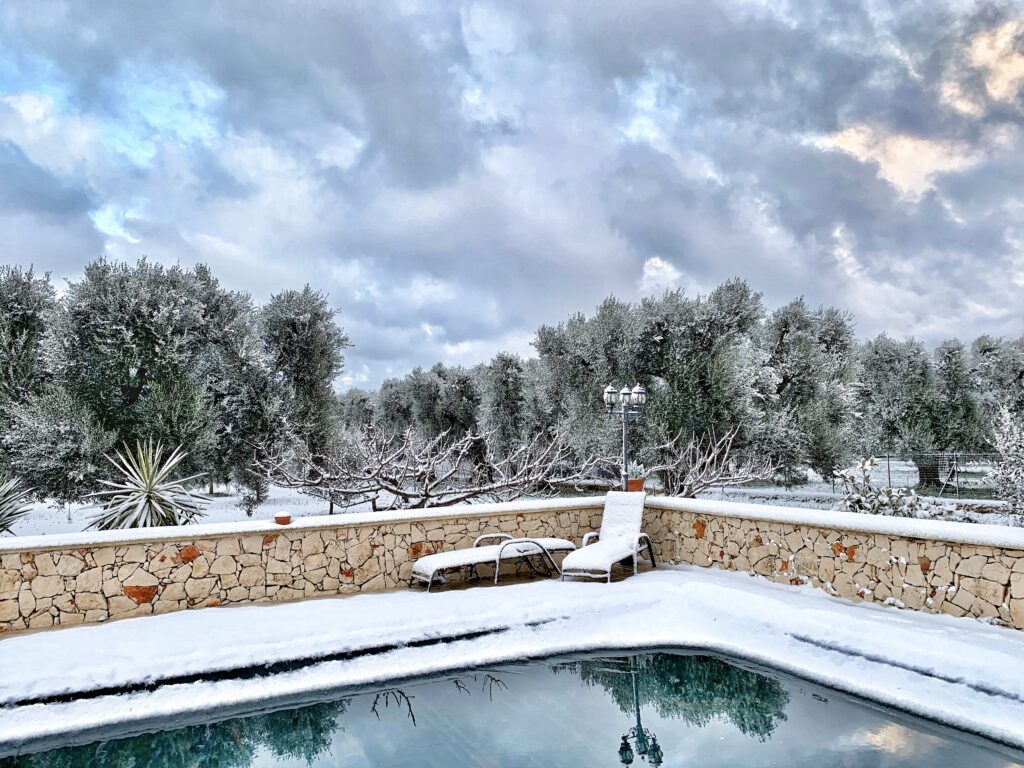
The period from late October through Easter is when much of Puglia, away from the main cities, genuinely goes into hibernation. Coastal towns can become very quiet. Beach clubs close. Some restaurants and accommodation businesses (including those must visit masserie) shut for the winter. Public transport and tourist services become more limited.
A visit to Puglia during our “not-summer” season isn’t necessarily a bad thing. It’s simply a different proposition.
If you want to experience Puglia as a working region rather than a tourist destination, winter can be fascinating. But don’t book a November trip expecting summer Puglia with cooler temperatures and fewer people.
You may find something less interesting, much wetter and colder, and have to work a lot harder to find what’s open.
Shoulder season is different again.
May, June, September and roughly the first half of October can offer some of the best conditions for visiting: pleasant weather, fewer visitors than the peak summer months and considerably more life than the winter.
For many visitors from the States, this is the sweet spot.
Find out more | The Puglia Guys Seasonal Guide to Puglia. Understanding the best time to visit Puglia.
Package tours are only as good as the local operator.
Guided touring suits plenty of first-time visitors, particularly if you don’t want to drive.
But Puglia’s tourism infrastructure is newer and less evenly developed than in some of Italy’s more established destinations. Accommodation can be further from a town centre than expected, and the quality of local guides and logistics can vary. That isn’t a reason to avoid organised travel. It’s a reason to be specific about who you book with.
None of these things are reasons to lower your expectations of Puglia itself.
They’re reasons to be precise about which parts of a trip are genuinely reliable – the region, the food, the welcome – and which parts still need a discerning hand to get right.
The Itinerary: what gets booked, and what should
The default route
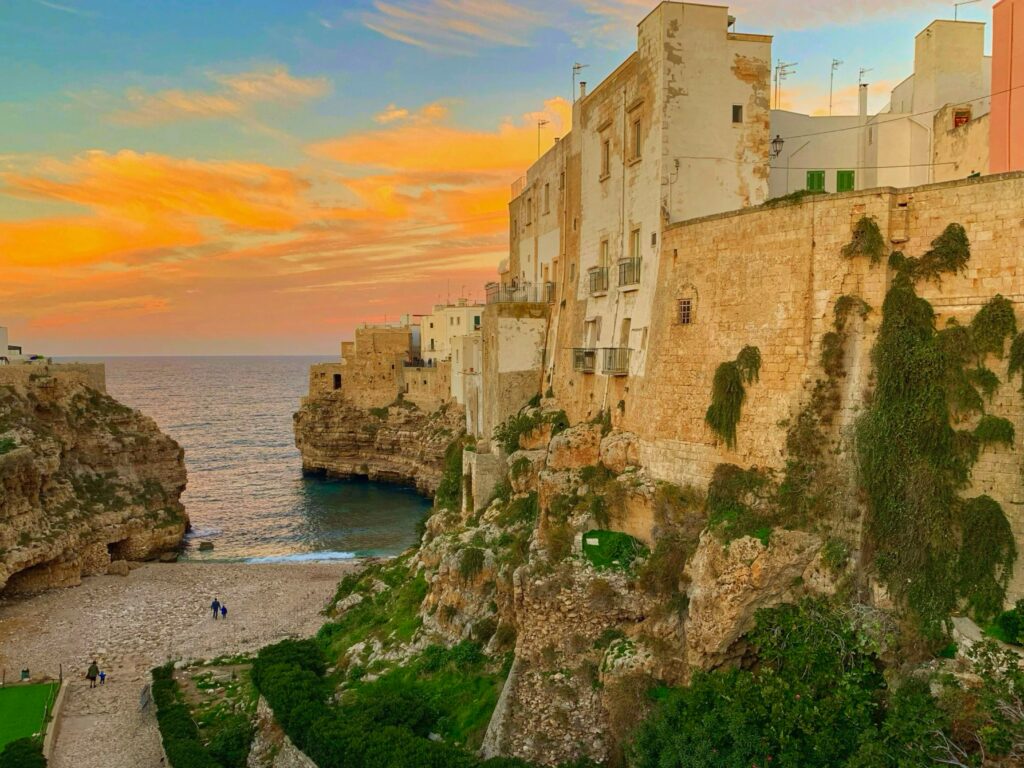
Ask ten visitors from the States what they’re planning to see in Puglia and the list will overlap by about 80 percent: Alberobello for the trulli. Ostuni for the whitewashed hill town. Lecce for its honey-coloured Baroque. Polignano a Mare for the cliff views. And, if there’s room in the schedule, a detour over the regional border to Matera for the sassi.
It’s a good list.
None of these places are overrated. They’re famous because they earn it.
But it’s worth being honest about what a list like this represents: the itinerary of someone who found Puglia through a “best of” roundup, rather than through any deeper sense of the region’s geography or rhythm.
The answer isn’t to tell you not to visit the famous places.
It’s to understand what they are – and then build something around them.
Smart bases, not nightly moves
The instinct on a first Puglia trip is to treat it like a checklist: one night in Bari, the next in Polignano a Mare, then Monopoli, Alberobello, Ostuni, Lecce. Pack the car each morning. Unpack it each evening.
It’s exhausting, it eats hours that could be spent actually being somewhere, and it works against everything that makes Puglia worth the detour from Rome or another Italian destination in the first place.
The better approach, and the one we come back to across every itinerary we write, is to think in bases rather than stops. Pick a well-placed town or countryside location and stay for several nights. Use it as a hub for day trips rather than moving the whole operation every day.
It’s a small shift in planning that changes the entire feel of the trip. Mornings stop being about checkout. They start being about where today’s day trip goes.
For most visitors from the States, that means two or three smart bases rather than one long chain.
An Itria Valley base — Ostuni, Locorotondo or a masseria in the countryside between them – covers Alberobello, Cisternino, Martina Franca and the coast down towards Monopoli and Polignano.
This is where many of the postcard towns live. Basing yourself here rather than in each one individually means you can see Alberobello in the cool of a weekday morning and be somewhere else – a masseria pool, a quieter town or the coast – by the time the tour buses arrive.
A Salento base — with Lecce the obvious option for many travellers – covers Otranto, Gallipoli, the Adriatic and Ionian coastlines and the deep south of the heel.
Lecce also works particularly well logistically for anyone flying via Brindisi.
A shorter trip — the three or four-night bolt-on at the end of a Rome or Amalfi holiday usually only has room for one of these two areas.
The Itria Valley is often the stronger choice for a first visit because it holds a high concentration of the famous names within a relatively small driving radius.
A dedicated week-plus Puglia trip is where both areas earn their place.
Find out more | The Puglia Guys Guide to Choosing Smart Bases in Puglia – a guide to choosing bases that suit your travel style and circumstances. Our Puglia Guys Road Trip Planner and Itinerary guide will help you plan essential itineraries around your chosen smart bases.


Pairing the famous with the quiet
Here’s where a Puglia itinerary really starts to become interesting.
The strongest version of a Puglia itinerary doesn’t choose between the famous towns and the quieter ones. It pairs them. From an Itria Valley base, that might mean a morning in Alberobello followed by lunch and a slow afternoon in Ceglie Messapica. It might mean swapping a trullo stay in Alberobello for the countryside around Locorotondo instead, geographically close, architecturally rewarding and considerably calmer.
Cisternino and Martina Franca do similar work: recognisably part of the same trullo-and-whitewash landscape everyone came to see, without the same level of concentration of visitors.
From a Salento base, the equivalent move is treating Lecce, Otranto or Gallipoli as anchor days, then giving at least one day to somewhere that doesn’t appear on every international itinerary.
That’s the point. You don’t have to choose between seeing the Puglia everyone has told you about and finding the Puglia you weren’t told about. Do both.
Matera
Matera deserves its own mention. It’s extraordinary, it’s an easy detour from Bari or a central Puglia base, and it is not actually in Puglia. It sits just over the regional border in Basilicata.
Worth including in many itineraries, but worth being accurate about, since visitors researching “Puglia itineraries” online can otherwise arrive expecting it to be part of the region proper.
Shaping it by trip length
Three to four nights — the bolt-on
One base, ideally in the Itria Valley, structured as two or three day trips rather than town-hopping. Alberobello and Ostuni as the anchor days. Locorotondo or Cisternino as the counterweight.
And one full day reserved for doing nothing at all — a pool, a beach, a long lunch. This is the piece of the trip most itineraries forget to include.
Don’t.
A week to ten days
Two bases, with the Itria Valley and Salento giving you two very different sides of the region.
The famous-and-quiet pairing can run through both.
This is the shape that allows Puglia to stop feeling like a highlight reel squeezed into the tail end of an Italy trip and start feeling like somewhere you actually stayed.
Two weeks or more
Now there’s room to go further. Add the Gargano in the north or explore more deeply around Taranto and the Ionian coast.
These are real parts of Puglia, increasingly written about internationally, but still much less familiar to visitors from the States (and that makes them particularly interesting for a return visit).
Read More | When it comes to accommodation, countryside Puglia’s masserie (one masseria, two or more masserie) are unique, often boutique and luxury hotels run on a smaller, more intimate scale. Discover the best of them with our Puglia Guys Masseria Guide. Otherwise, Puglia’s most popular accommodation choices consist of some stunning old town palazzi (old historic buildings) also operating as boutique hotels, trulli and old town private apartments. To understand the range of accommodation and which is right for you, check out our Puglia Guys Accommodation Guide.

The part nobody can put on a map
This is ultimately what we think is missing from many Puglia itineraries.
Choosing smart bases is a good start. Understanding the geography is essential. Knowing when restaurants open, where the ZTL begins and whether you’ll need cash for the tourist tax will make the trip considerably easier.
But there’s another layer.
Puglia is a place you experience differently when you understand its rhythm. The passeggiata. The late dinners. The afternoon quiet. The village festival you didn’t know was happening. The market where the person selling cheese is also the person who made it. The beach bar that looks closed until suddenly, at 7pm, it isn’t. These are the moments that don’t necessarily appear on a “10 Best Things to Do in Puglia” list. And they’re often the moments people remember.
That’s the Puglia we’ve spent years getting to know. The Puglia that was here before you arrived – and will still be here after you leave.
That’s the Puglia we want our guides to help you find.