A Timeless Town with Deep Roots (and Even Deeper Flavours)
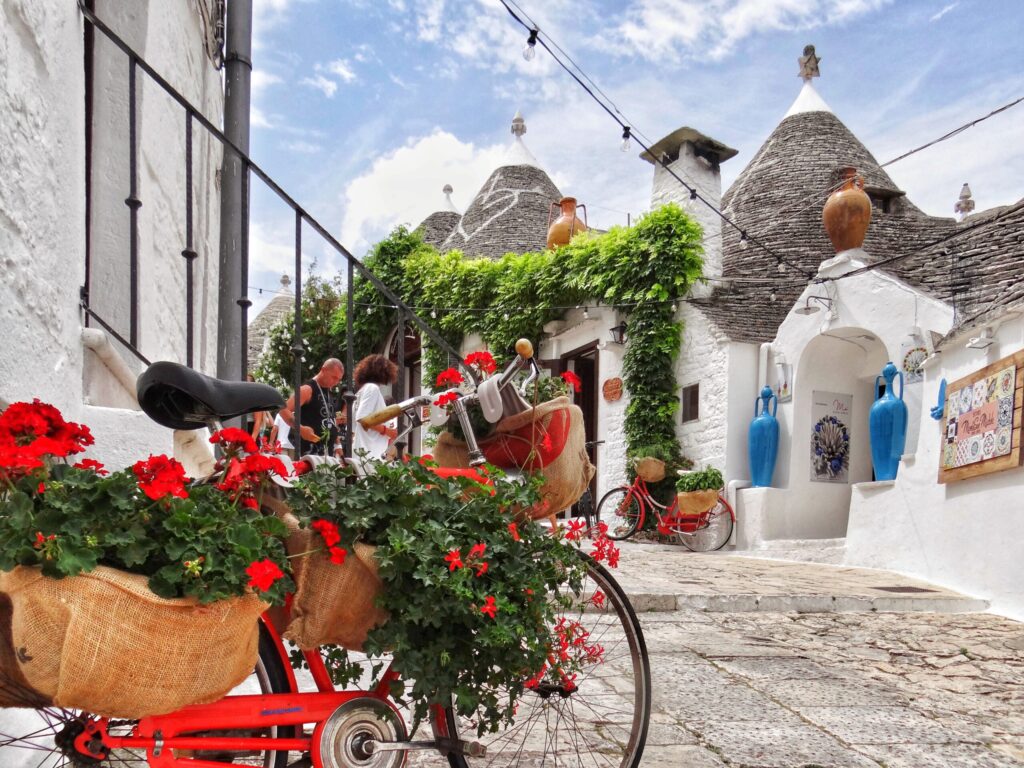
Ceglie Messapica (pronounced CHEH-lyeh) is a town of around 20,550 inhabitants. Nestled in the hills of northern Salento at over 300 metres above sea level, it has striking views over the Valle d’Itria towards near neighbours Ostuni, Cisternino and Martina Franca. Less visited than those neighbours, Ceglie has a reputation as a local gastronomic hub.
Agriculture and livestock still shape the local economy, and you’ll find the rhythms of local life very much alive in Ceglie.
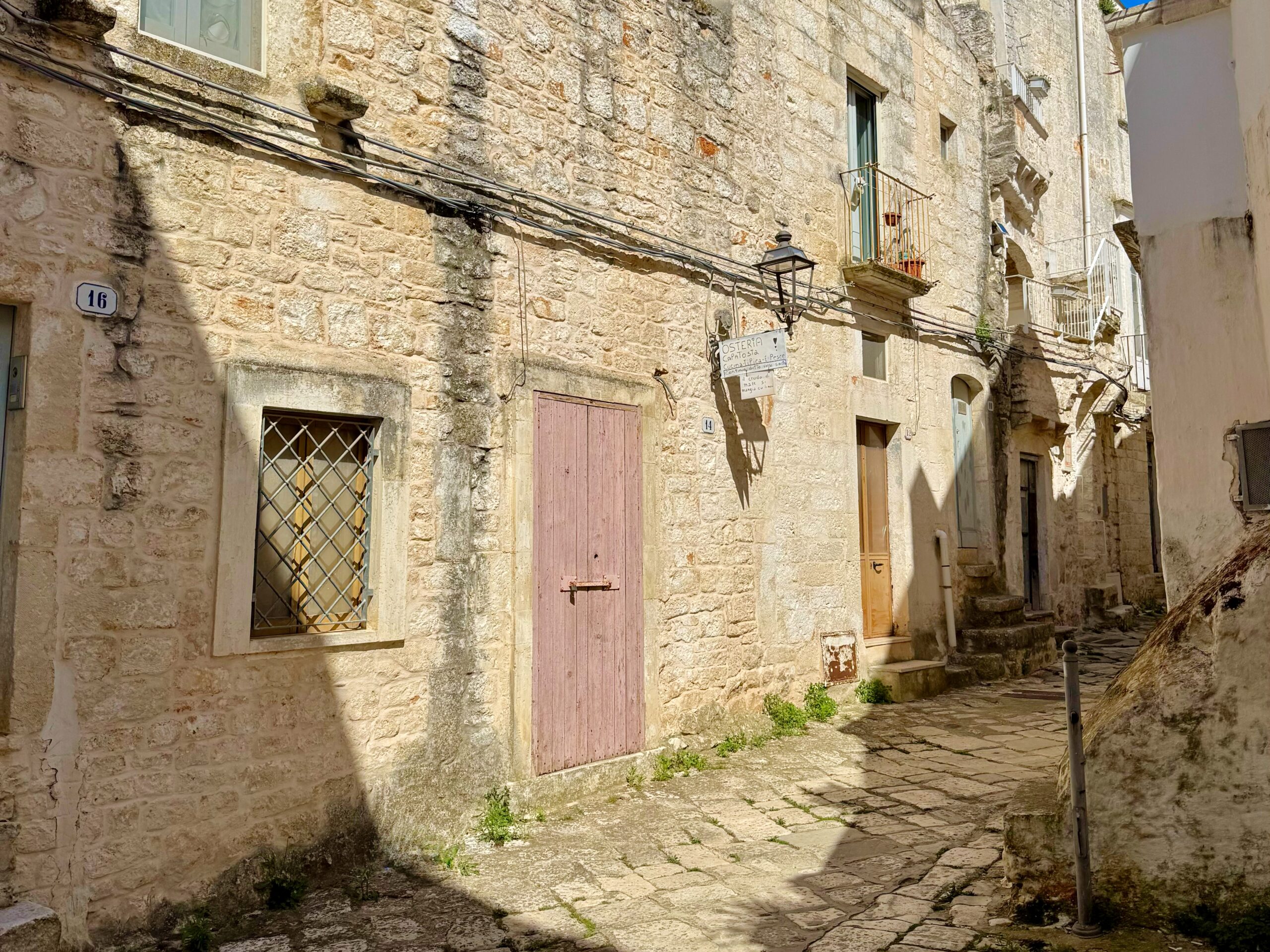
With an attractive historic centre that feels less curated, but beautifully authentic, this is a town that isn’t trying to be a tourist attraction – it simply is what it is: authentic, hospitable, and full of character.
A Short History of Ceglie Messapica
Ceglie Messapica is among the oldest continually inhabited towns in Puglia. Its origins stretch back to the Messapian civilisation, a pre-Roman people known for their walled hilltop settlements. The remains of four concentric defensive walls – part of the town’s cinta messapica – still survive and can be visited today.
Under the Romans, Ceglie (then Caelium) became a rural settlement, later growing under Norman, Swabian and Angevin rule. By the Middle Ages, it had developed into a small fortified centre, crowned by its Ducal Castle and surrounded by fields and olive groves.
The town’s patron saint is Sant’Antonio di Padova (St Anthony of Padua), celebrated on 13 June each year with processions and festivities.
What to See in Ceglie Messapica
Historic Centre & Ducal Castle
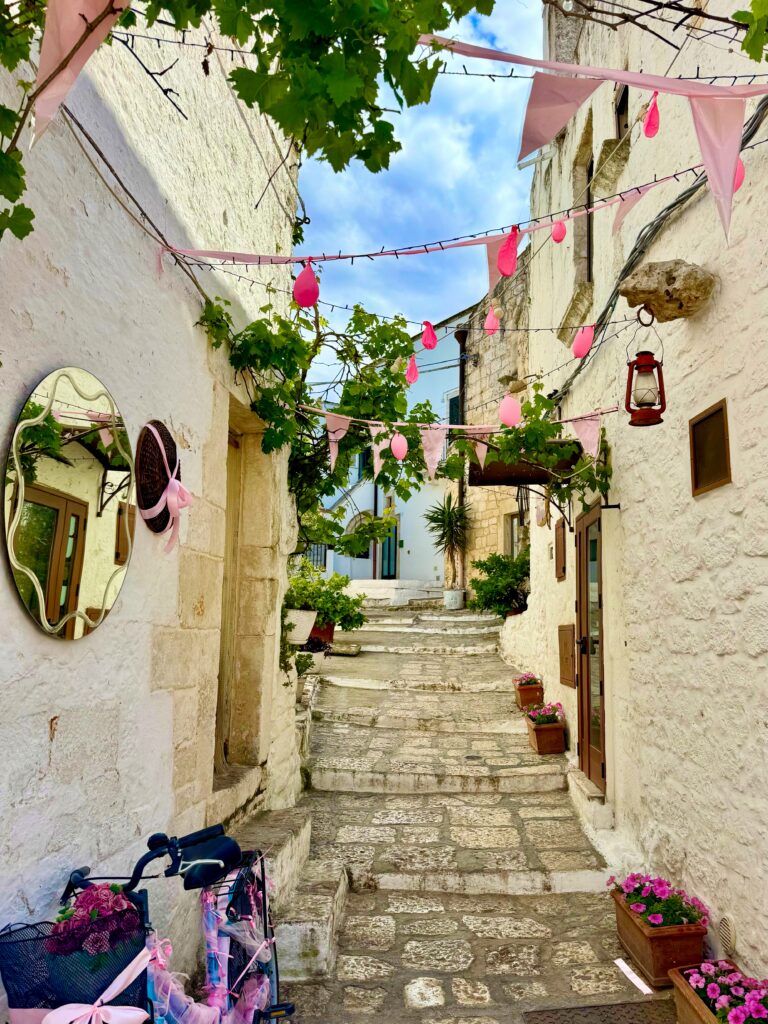
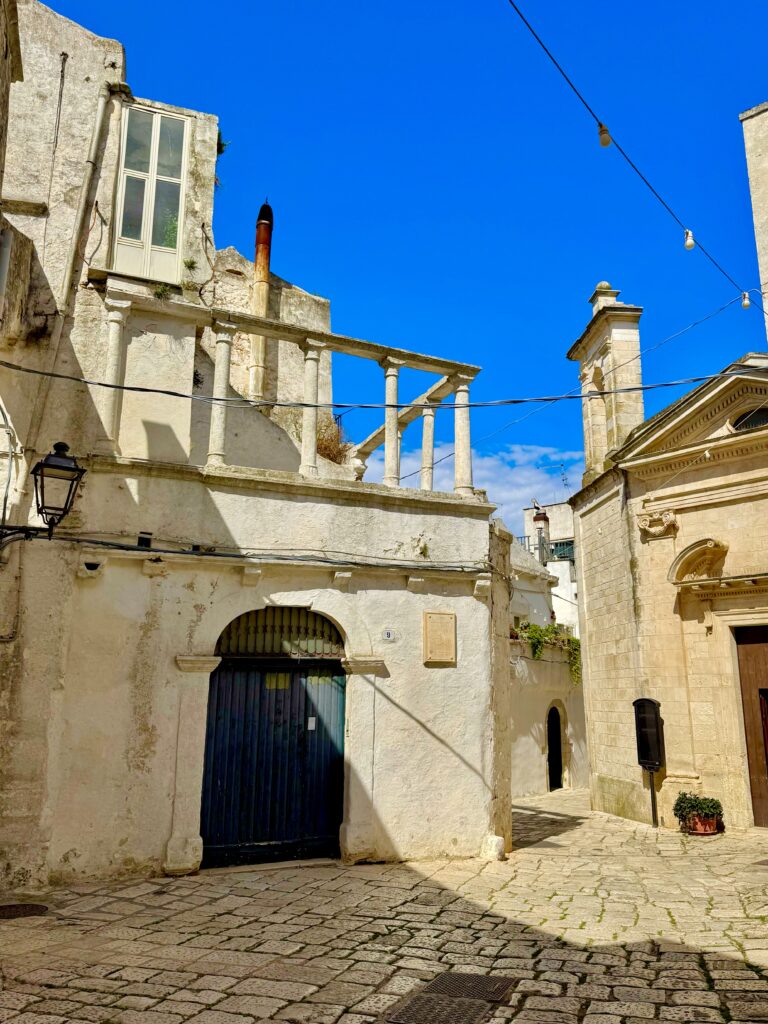
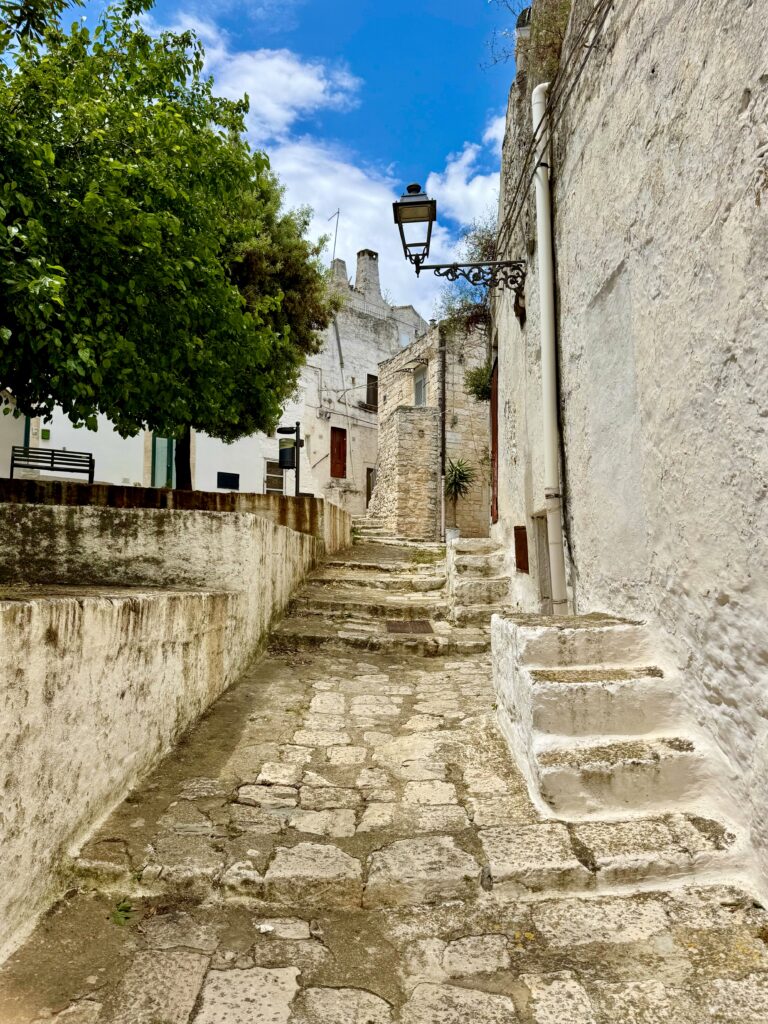
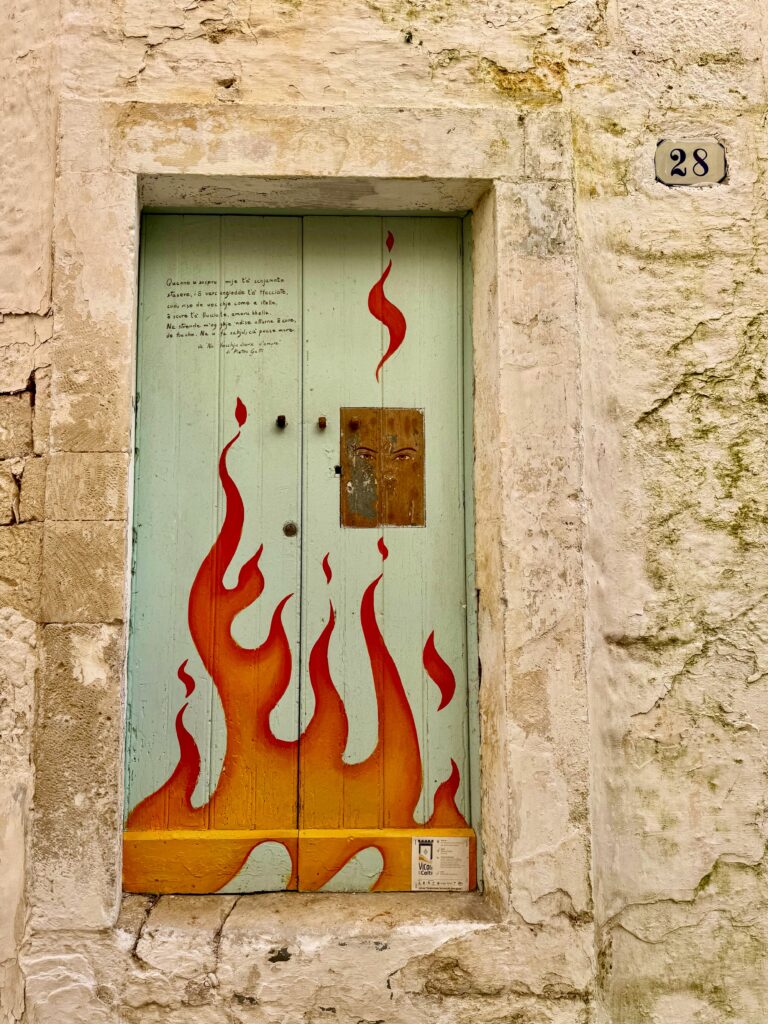
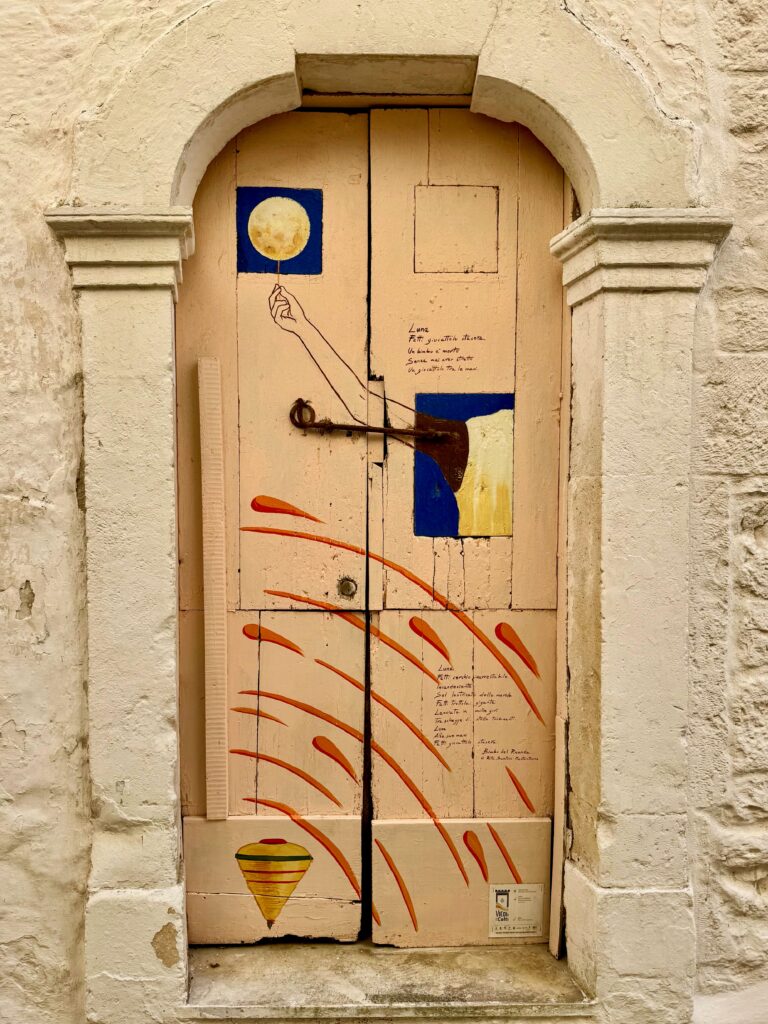
The atmospheric old town is a maze of whitewashed alleys, stone staircases, and surprising vistas. At its heart stands the Castello Ducale, originally a Norman tower expanded into a noble residence. Today, it sometimes hosts exhibitions and local events.
Ceglie’s centro storico feels slightly different from the Valle d’Itria’s other white walled hilltop towns. It’s less “curated” (in a very refreshing way), and whilst the architecture has similar themes, there are noticeable differences. The pitched and tiled rooftops, for example. It’s also less touristic.
Chiesa Madre (Santa Maria Assunta)
Ceglie’s main (and largest) church, officially known as the Collegiata di Maria Santissima Assunta, is better known locally as the Chiesa Madre or simply the Matrice. For centuries, it was the town’s only parish church and the only one with a baptismal font—until 1855, when the parish of San Rocco was established.
The current building dates back to 1786, the result of a major expansion and renovation project carried out between 1781 and 1786. But its roots run much deeper.
The Matrice rises on what was once the acropolis of ancient Messapian Ceglie, right in front of the Ducal Castle. Before the 18th-century rebuild, a medieval church stood here—and we know for certain that it existed by 1521, thanks to a Latin inscription once set into the original façade before it was demolished to make way for the current structure.
What you see today is a grand late-Baroque space with soaring ceilings, rich altars in coloured marble, and a sense of enduring civic pride. It features Neapolitan artworks, and a beautiful pipe organ. It’s still very much at the sacred heart of religious life in Ceglie..
Other Churches
- Chiesa di San Rocco – Dedicated to the town’s other beloved saint. The local parish have a blog!
- Chiesa di San Gioacchino – An intimate, frescoed chapel. Given its full name: Chiesa di San Gioacchino padre della Beata Vergine Maria, it is the beautifully domed building you see from a distance as you approach Ceglie.
- Chiesa di San Domenico – Among the most beautiful churches in Ceglie with richly decorated baroque altars. Its construction dates back to the end of the 17th century. It is rarely opened.
Cave of San Michele & Grotte di Montevicoli
Just outside town, these natural karstic caves can be visited with a guide. Inside the former are the remains of an early Christian place of worship, including a rare 7th-century fresco of the Virgin Mary. Alongside it, you’ll find faded depictions of Christ in blessing and the Archangel Michael—precious fragments of sacred art carved into stone.
Sadly, the cave sits within the garden of a private property, making access extremely limited. The site is currently in need of restoration and preservation, and the local municipality is working to raise awareness of its significance. Though difficult to visit, it remains one of Ceglie’s most evocative—and fragile—testimonies of its early Christian past.
Montevicoli is rich in stalactites and offers a cool refuge in summer.
Nature Walks & Countryside
Ceglie’s unspoilt countryside is ideal for walkers, with trails leading past ancient dry-stone walls, trulli, olive groves, and wild orchids in spring. Try the Cammino di San Rocco or head towards the cinta messapica for archaeology amidst nature.
Sweet Traditions: Biscotto Cegliese & Pasta Reale
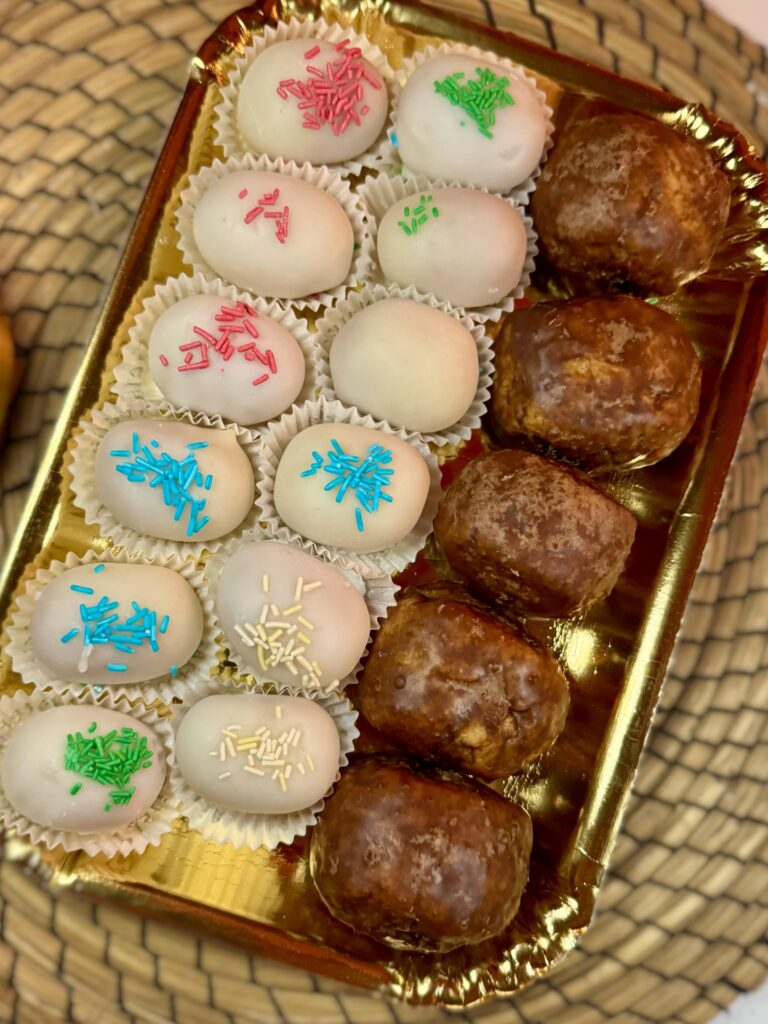
No visit to Ceglie Messapica is complete without tasting its most iconic sweet treat: the Biscotto Cegliese. Don’t be fooled by the modest name—this is no ordinary biscuit. Made from ground almonds, local cherry jam (often sour amarena), and a touch of lemon zest or cinnamon, the biscotto is rich, moist, and fragrant. It’s traditionally shaped by hand and baked to a soft, golden finish. Protected by a Slow Food Presidium, it’s a bite of heritage you won’t forget.
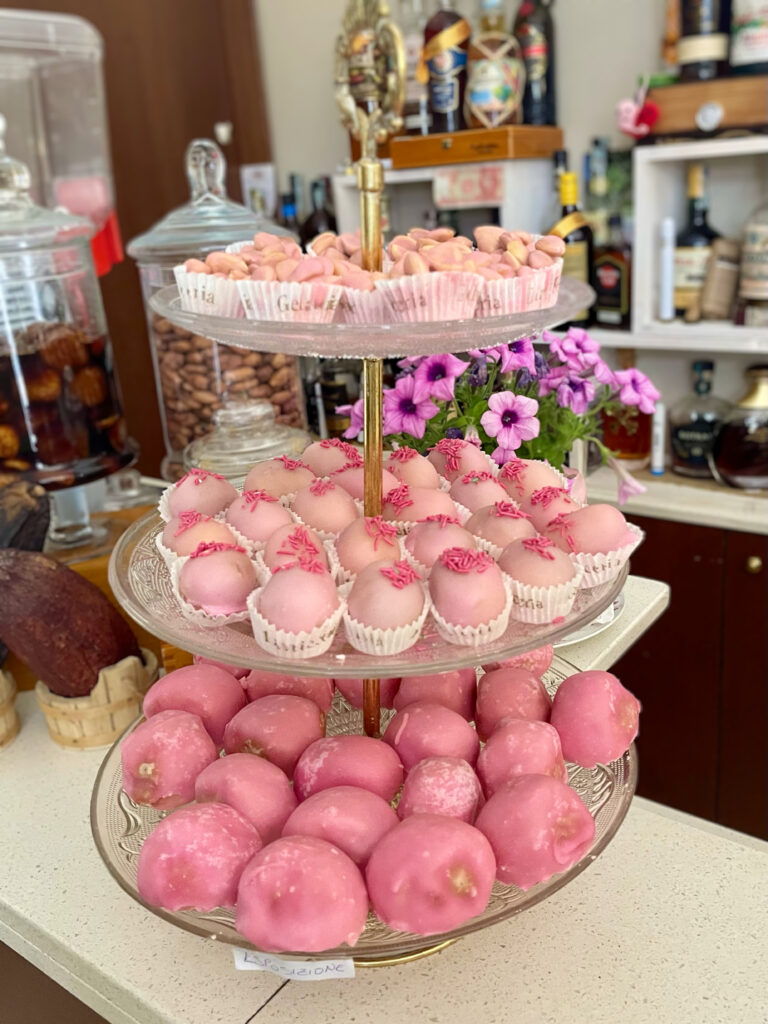
Equally worth sampling is pasta reale, a delicate almond-based paste used to craft elegant pastries, often filled with jam or cream, and sometimes dusted with sugar or glazed. In Ceglie, it’s an art form.
Caffè Centrale – A Local Institution
To try the most historic version of these confections, head straight to Caffè Centrale, located at Corso Garibaldi 22. This storied café was founded in 1861, right in the heart of town, and has been at the centre of Ceglie’s social and culinary life ever since.
It was here that the Biscotto Cegliese was not only perfected but lovingly preserved across generations. Today, Caffè Centrale continues to produce it using the original recipe, alongside an impressive selection of almond-based pastries, including an outstanding range of pasta di mandorla (almond paste sweets).
They’re also known for inventing the Spumone al Biscotto Cegliese, a creamy, frozen dessert infused with the town’s signature flavours, and for reviving the antico rosolio “Gioia Mia”, a traditional liqueur with romantic, old-world flair. They also have gelato!
Whether you’re stopping for a coffee, a sweet treat, or a slice of edible history, Caffè Centrale is an essential stop on your Ceglie itinerary.
Where to Eat in Ceglie Messapica
Ceglie is a certified Città della Gastronomia, and food is serious business here. Whether it’s Michelin-leaning tasting menus or rustic trattoria fare, you’ll find the same commitment to quality ingredients and time-honoured traditions.
Cibus
An iconic restaurant in Puglia’s gastronomic scene. Ten years ago it was well ahead of the curve, but today it feels as though the rest of Ceglie’s dining scene has caught up. Not that it has gone backwards, rather the wider dining scene in Ceglie has moved forward around it.
Its reputation continues to attract visitors, many of whom leave glowing reviews that reinforce its status. As locals, we prefer to choose to eat elsewhere. Not because the food at Cibus is lacking, but because we enjoy cooking of a similar quality, for less.
That said, on our last visit, the service (like the desserts), was something to shout home about for sure.
Some of the dishes are certainly more ambitious. The maccheroncini with white rabbit ragù and pecorino had real depth of flavour and was beautifully balanced. The polvere sprinkled over the top, however, felt like an unnecessary flourish, adding little in terms of taste.


The orecchie de prete represented fair value at 12€, although their presentation lacked a little love. The arrosto misto and baccalà were both fine, but didn’t particularly stand out. We’ve enjoyed equally good dishes elsewhere in town with more generous portions at a lower price point (see our review of l’Antico Arco Osteria) .
The house antipasti we chose appeared to be a more curated selection than the standard offering, something only reflected in the bill at the end of the meal. While thoughtfully presented, it lacked a real wow factor. The desserts, on the other hand, were excellent and refreshingly different. The almond copeta and lemon bocconotto are both highly recommended.


The setting, too, felt a little dated rather than timeless. This is still a restaurant worth visiting for its reputation and history, and the service is attentive and polished. But considering the overall experience and value for money, we would be more inclined to return to l’Antico Arco Osteria.
Osteria Pugliese
Vico I, Via Orto Nannavecchia, 14
Honest, family-run food. Expect hearty servings of orecchiette with braciole, fava and chicory purée, and grilled meats at budget-friendly prices.
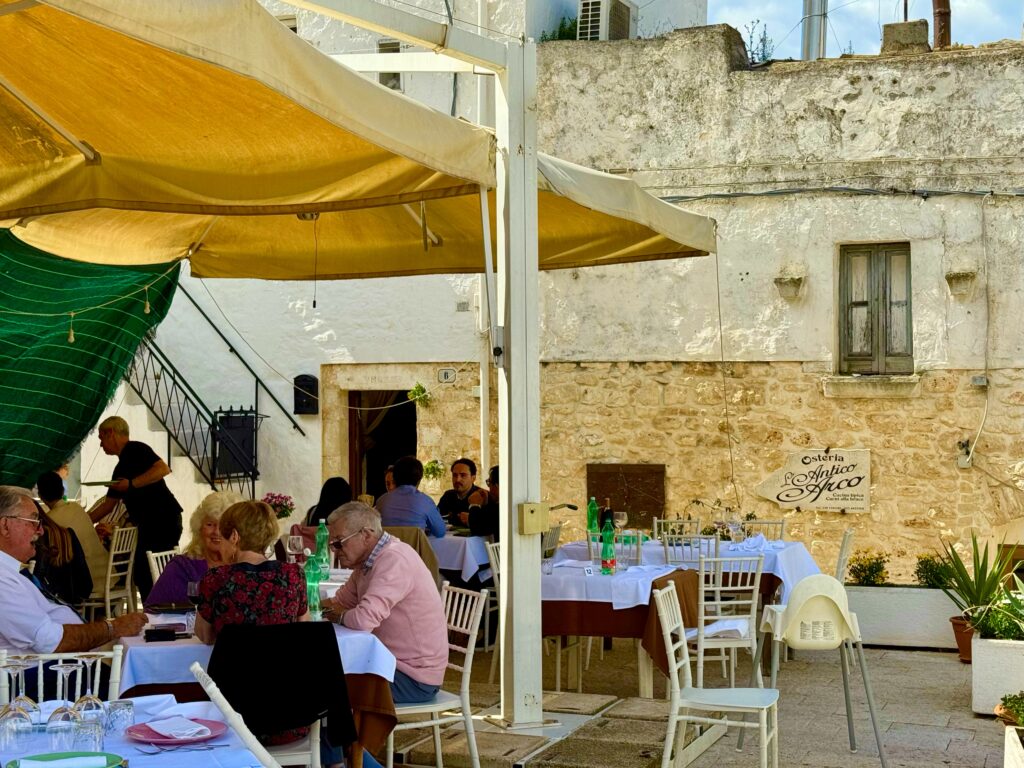
L’Antico Arco Osteria

Via Celso, 4
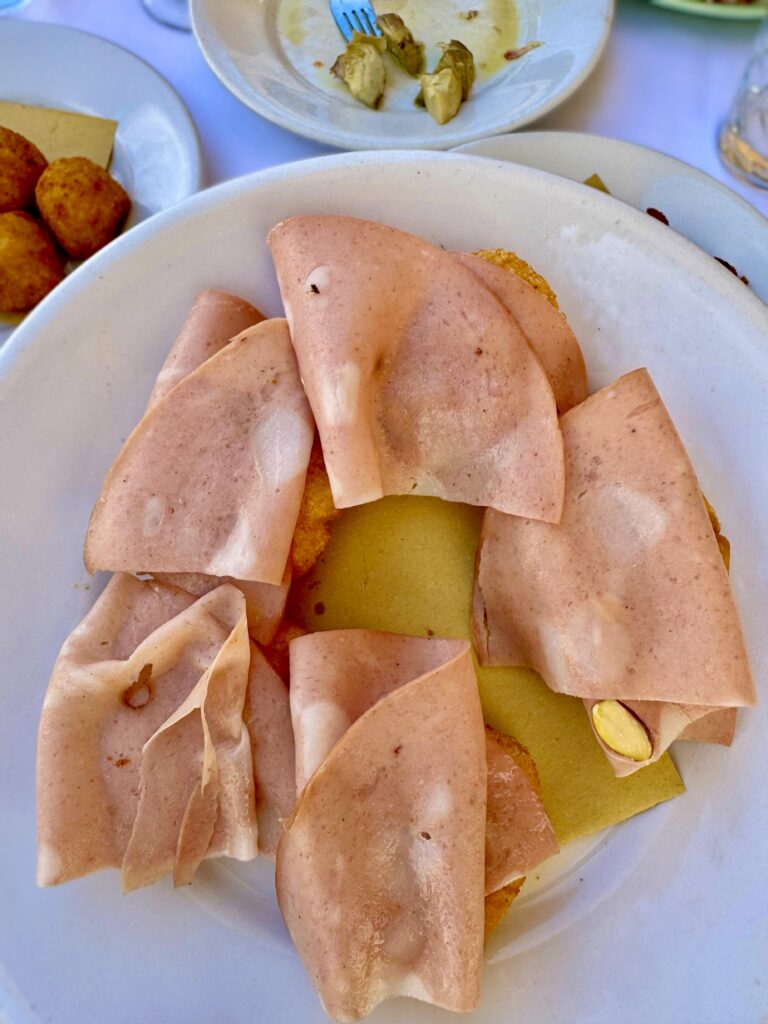
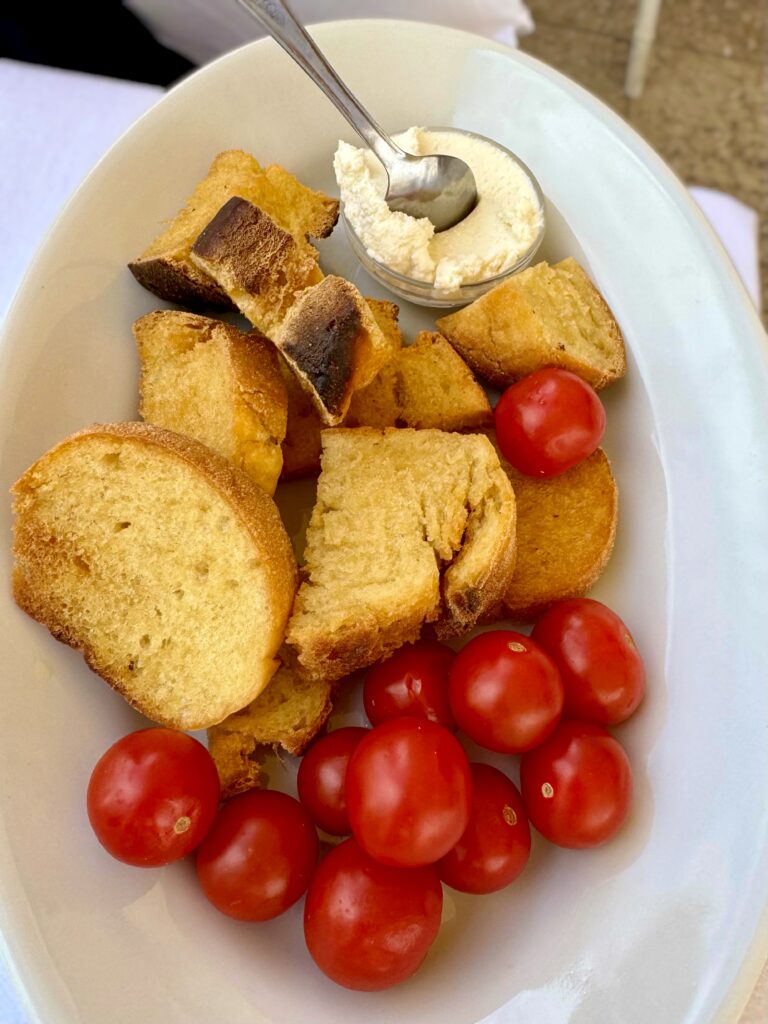
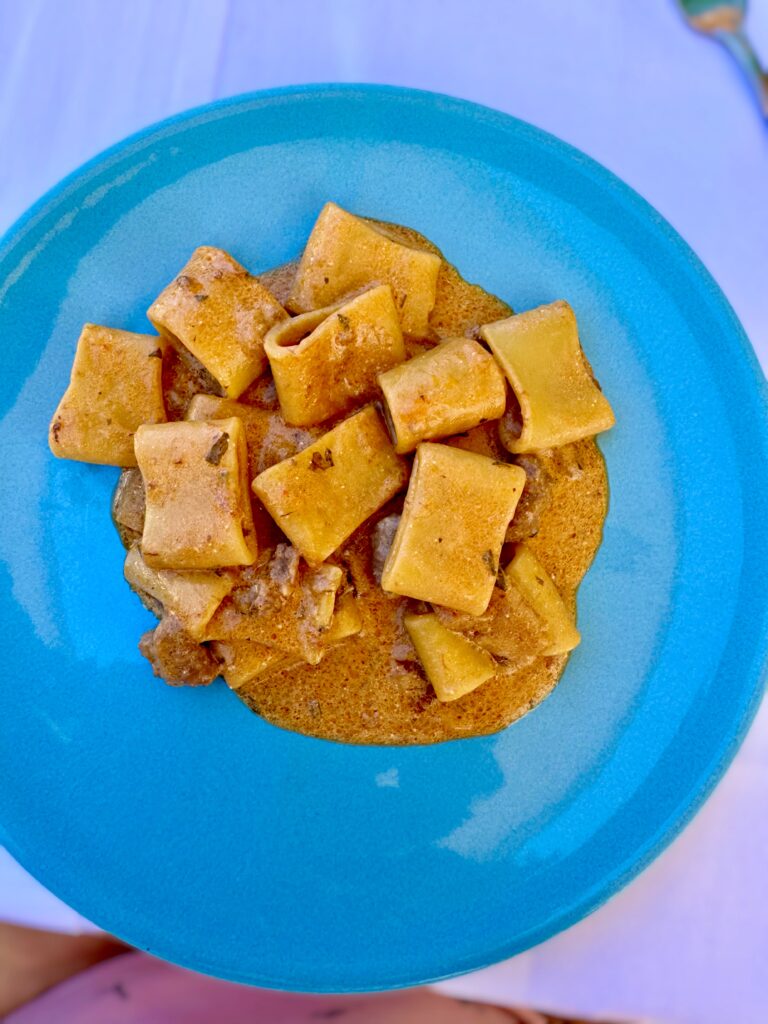
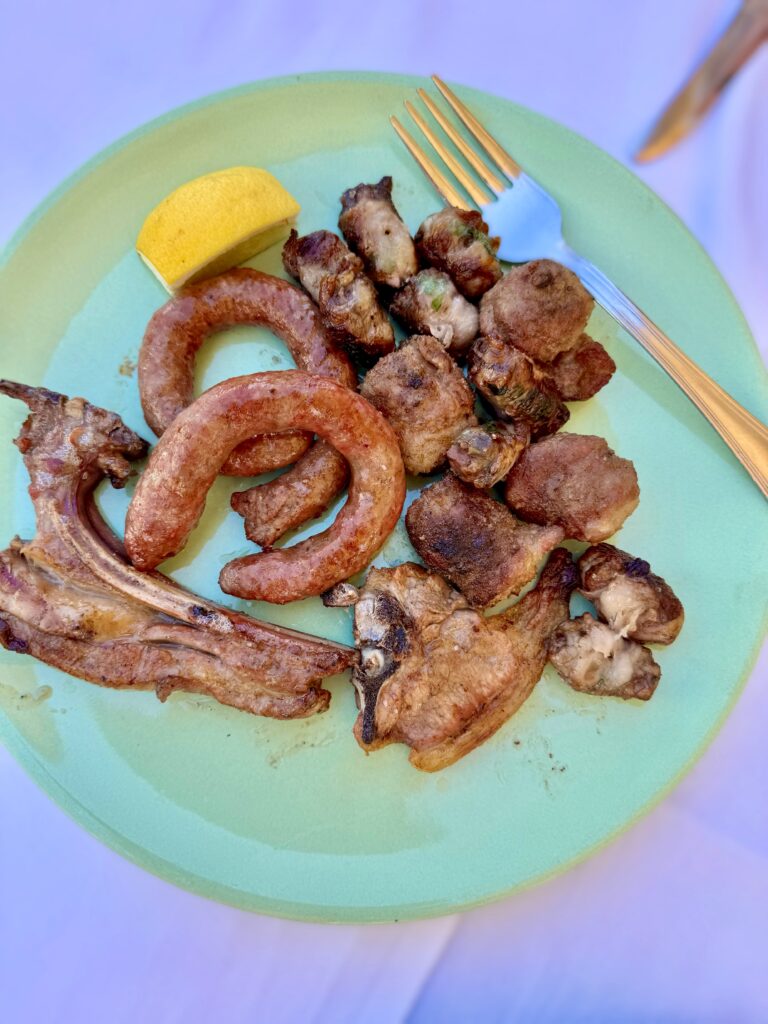
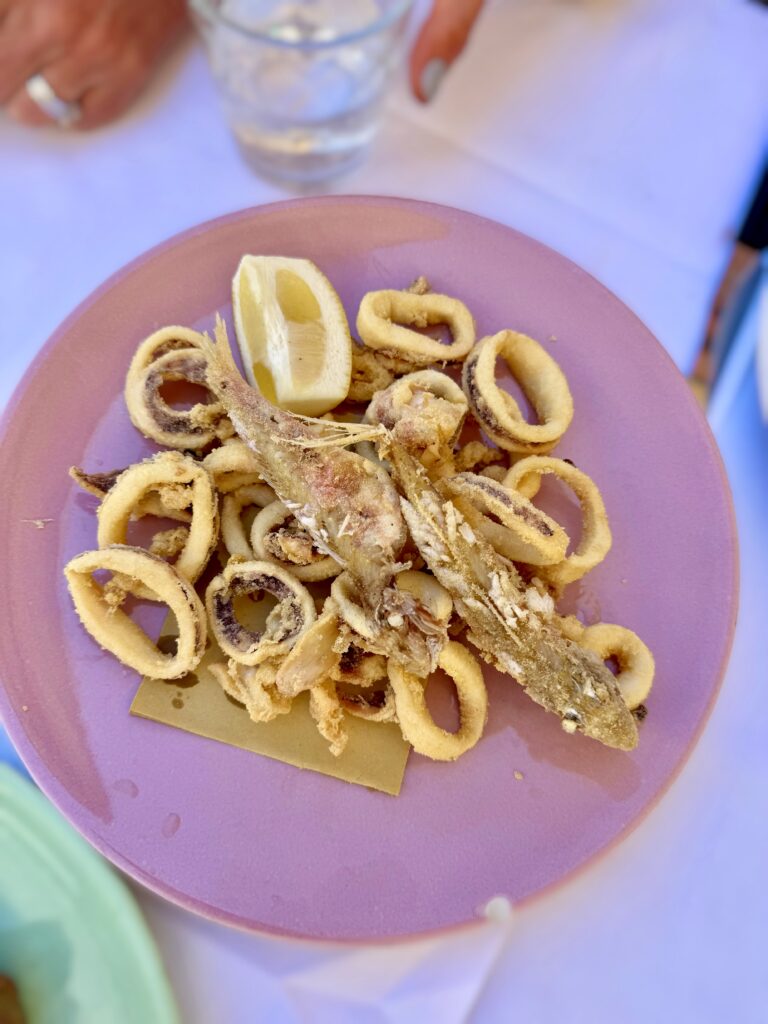
Traditional home-style cooking in the historic centre. Delicious, simple, and very good value. Five of us shared antipasti for three (we had nine dishes of delicious food, including fantastic polpette), six pasta dished (and they were standout), two mains (we couldn’t resist), a very decent bottle of negroamaro rosato, with water and coffees. Including the coperto it came to less than €40 each, and in a lovely terrace setting too.
Osteria del Capitolo
Via Orto del Capitolo, 10
A favourite for generous portions and true Puglian flavour. Their spaghettoni all’arrabbiata is a standout, and the atmosphere is wonderfully unhurried—just like it should be.
L’Osteria del DivinGustare
Via San Rocco, 19
Recommended for well-executed traditional fare in a relaxed setting. Local recipes, local ingredients.
Da Gino
Contrada Montevicoli 57b
On the outskirts, this family-run spot offers excellent local dishes in a rustic setting. Our friends raved about it—expect traditional flavours and a warm welcome.
EnoCocus – Acini & Carbone
Via Pendinello, 2
A braceria specialising in grilled meats. Described as a “meat lover’s dream” by carnivorous friends. Come hungry.
Calce Wine Bar
Piazza Vecchia, 17
A chic and stylish wine bar with curated bottles, neighbouring wellness and retail spaces. Highly recommended by friends, even if we’ve not been yet.
Ceglie Messapica’s Food Festival
August or September
Location: Historic centre
Ceglie Messapica’s Food Festival
Every August, the whitewashed streets of Ceglie Messapica burst into life with one of Puglia’s top culinary events — the Ceglie Food Festival. Many recognise Ceglie as the region’s gastronomic capital, so this festival draws food lovers, chefs, and curious travellers for two days of celebration dedicated to the richness of southern Italian cuisine.
Set across four thematic zones winding through the historic alleys and “nchiosce” (tiny courtyard streets) of the town’s historic centre, the festival showcases the finest in local produce, street food, traditional recipes, and international flair. Visitors can watch orecchiette being handmade by nonnas, sample rustic favourites like biscotto di Ceglie, grilled meats, and sun-dried tomatoes, or join short workshops led by artisans and trullo builders.
From sensory spice trails to the evocative scent of simmering sauces, the event blends food with culture, music, and community spirit. Cooking shows feature star chefs, while conferences and tastings promote sustainable tourism and local entrepreneurship. As dusk falls, the piazzas pulse with pizzica rhythms and communal feasting.
When to Visit & Practical Tips
- Best Time: Spring and early autumn for countryside walks, summer for festivals.
- Saint’s Day: Don’t miss the celebrations of Sant’Antonio di Padova on 13 June.
- Parking: Free lots are available near Via Gualtiero and Via San Rocco.
- Nearby: Combine with stops in Ostuni, Grottaglie (for ceramics), or Martina Franca.
Getting to Ceglie Messapica by Public Transport
From Lecce:
Take the Ferrovie del Sud Est (FSE) train to Ceglie Messapica. Check FSE train services on their website.
From Brindisi:
First, take a Trenitalia train to Francavilla Fontana (on the Brindisi–Taranto line). From there, you can transfer to the FSE train to Ceglie Messapica — both services run from the same station.
From Ostuni:
There is a direct FSE bus from Viale dello Sport. The journey takes about 20 minutes.
STP Brindisi bus services:
Check this link to STP Brindisi for bus services and timetables to Ceglie.
Final Thought
Ceglie Messapica may not scream for attention, but that’s precisely its appeal. It’s a place for slow wandering, lingering lunches, and culinary discovery. Whether you come for the caves, the churches, or simply the biscotti cegliese, you’ll leave with more than just a full belly—you’ll leave with a little piece of real Puglia.