Italian tourists eat better than you do in Puglia. Here’s why.
There is a quiet comedy playing out at restaurant tables across Italy every summer. Two diners sit in the same room, eat from the same menu, pay roughly the same bill – and walk away with entirely different experiences. One is an Italian spending a week in the south. The other is a British or American visitor who has been looking forward to this meal for months. The Italian almost always eats better.
This isn’t about money, or luck, or some mystical insider knowledge. It’s about something more structural: what each diner is actually looking for when they sit down, and how those expectations shape what ends up on their plate.

What foreign visitors are really buying
When Anglo-American travellers choose a restaurant in Italy, they are rarely choosing purely on food. They’re buying a feeling: of discovery, of immersion, of having arrived somewhere real. A cave restaurant carved in the rock. A masseria terrace as the sun drops over olive groves. A sommelier who speaks perfect English and explains what the Primitivo is doing in the glass. These are not nothing. But they are not, primarily, about the cooking.
The signals foreign visitors rely on – Michelin recognition, boutique hotel dining rooms, romantic settings and English-speaking staff and legible menus – speak a language they already understand. They are proxies for quality in the absence of something more essential: a felt sense of what good Italian food actually tastes and costs. Without that baseline, a theatrical setting becomes the benchmark. The room is not the backdrop; it has become the meal.
Italian domestic tourists bring something different to the table. Their first question when assessing a restaurant is about the materie prime – the raw ingredients. Is the oil right? Is the pasta made today? Where is the cheese from? They bring a lifetime of comparison. They know how a dish compares with their grandmother’s cooking, and they know when a kitchen is honouring that tradition and when it is performing it. The difference between the two matters enormously to them. The word Italians use is genuinezza – genuineness – and it is structural to how a meal is assessed, not decorative.
They are also, frankly, more price-conscious. Rapporto qualità/prezzo – value for money – is not an afterthought for Italian staycation tourists; it is close to the first thing. A beautiful room at an inflated price doesn’t earn goodwill; it provokes suspicion.
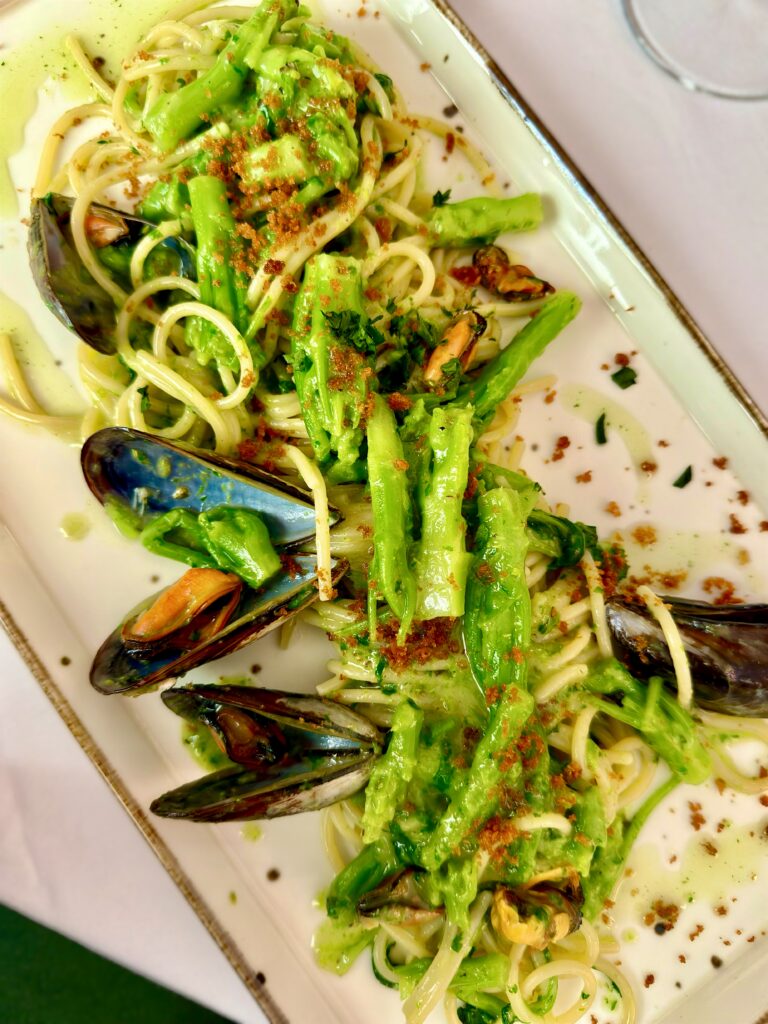
In Puglia, this matters more than almost anywhere
Puglia’s food culture makes the gap between these two dining philosophies especially wide, and especially consequential.
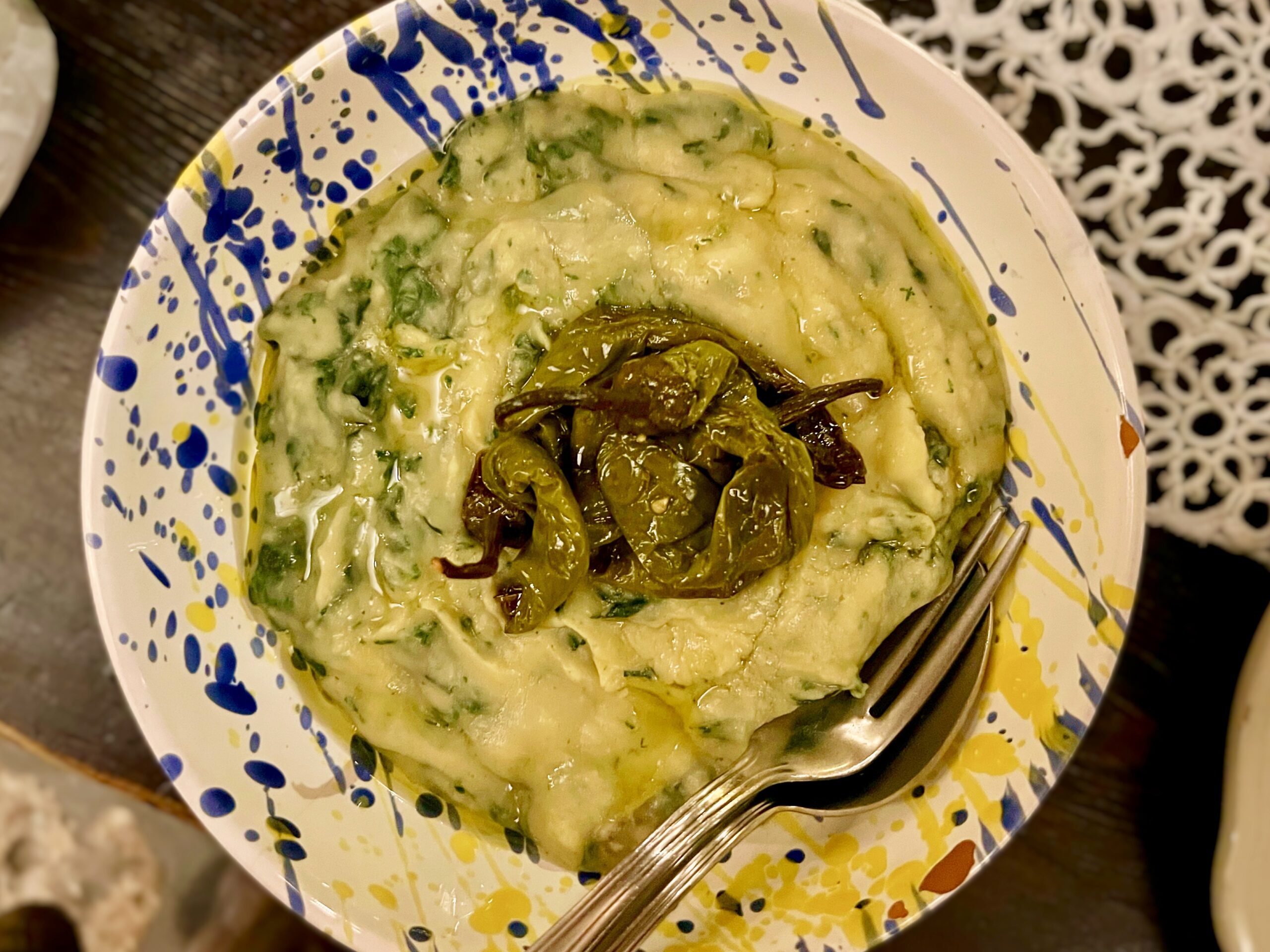
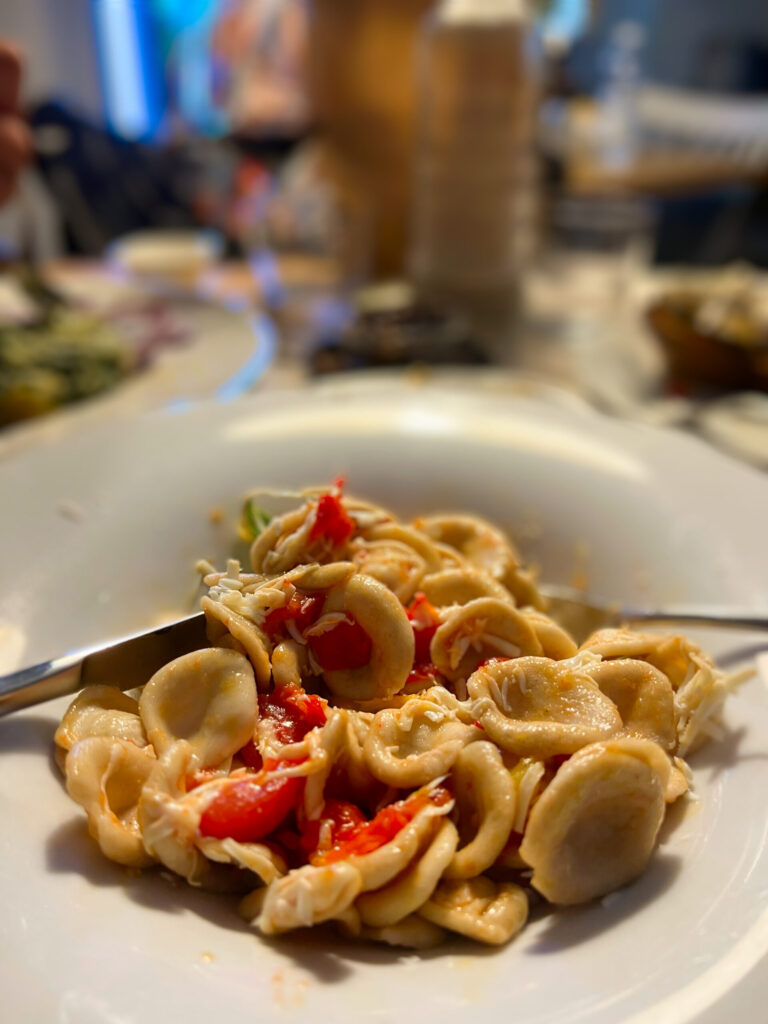
This is a region whose culinary identity is rooted in cucina povera: dishes born of necessity, built from what was local, seasonal and inexpensive, elevated by technique, passed down through generations, and now understood as something close to genius. Fave e cicorie – dried broad bean purée with wild chicory. Ciceri e tria – chickpeas with fried pasta. Orecchiette con le cime di rapa, turned out from ten thousand domestic kitchens every week (when in season, of course). These are not rustic curios on a menu written for foreigners. They are the actual food of this place, perfected over centuries.
In an era of ultra-processed everything, Puglia’s traditional table offers something genuinely rare: hearty, healthy, deeply seasonal cooking rooted in the rhythms of the land and sea. The ingredients haven’t changed because they don’t need to. The recipes are simple because simplicity, here, is a form of mastery. When an Italian reviewer writes that a trattoria cucina come la nonna, cooks like a grandmother, it is the highest possible praise. It is not nostalgia. It is a standard of excellence.
That standard is most often found in informal settings: family-run trattorie and osterie where there is no attempt to impress with the room, because the room isn’t the point. Foreign visitors, without the frame of reference to recognise this, tend to walk straight past them.
A word on tasting menus
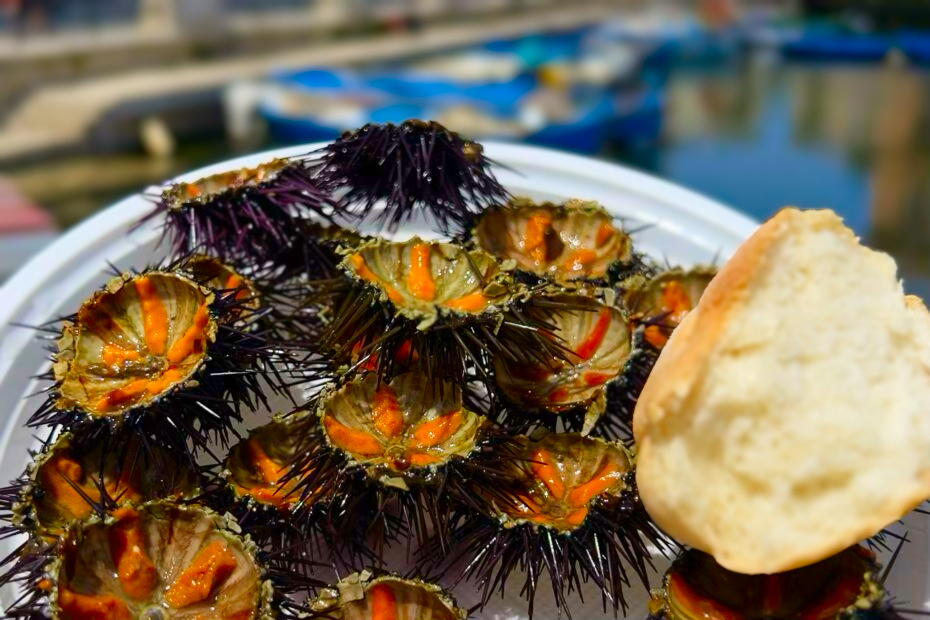
Tasting menus are becoming more frequent in Puglia, and we understand why. They offer chefs a degree of creative control, and they offer a certain kind of visitor a dining event – a structured, photogenic progression through a region’s flavours. If you’re after the vibe, rather than the food, they deliver.
But we are sceptical, and we think you should be too.
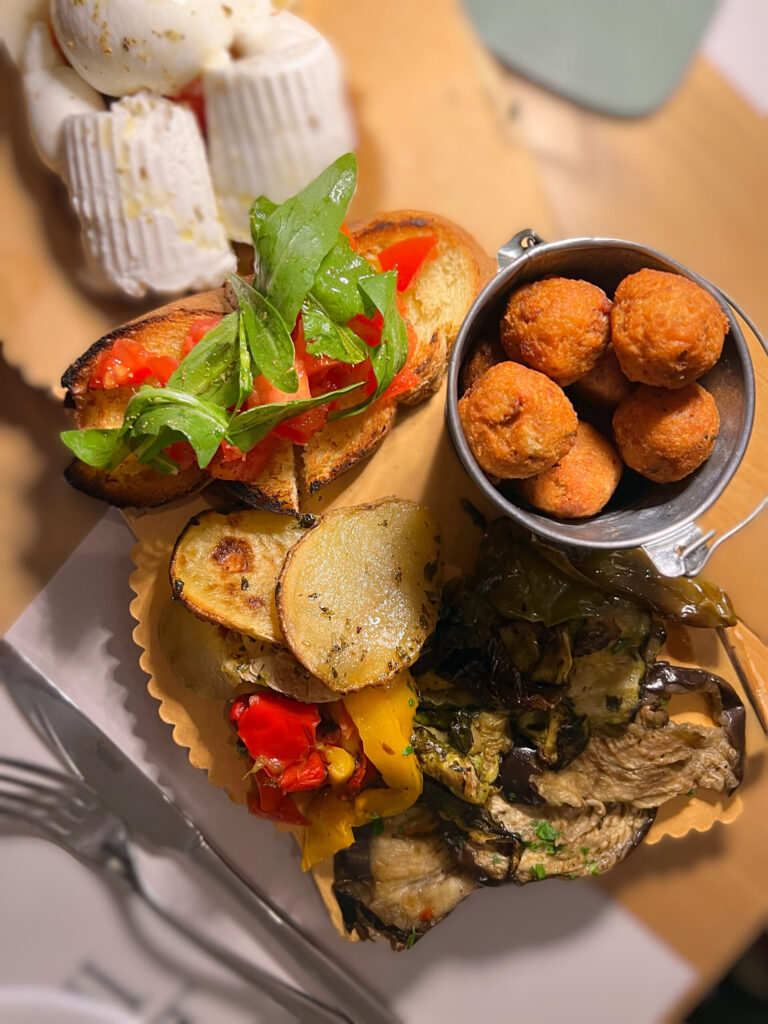
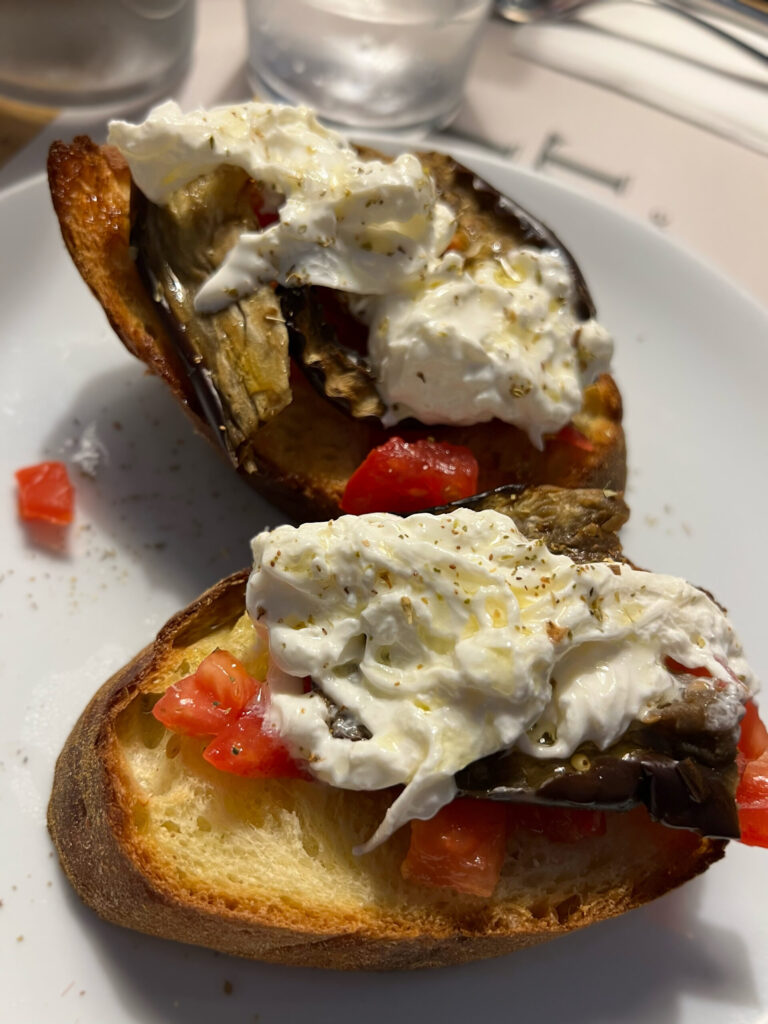
Puglia, like the rest of Italy, has always had tasting menus. They’re called antipasti. A long, generous spread of small dishes. Local cheeses, cured meats, marinated vegetables, bruschette, bombette – eaten slowly, communally, with good bread and local wine, is how this region has traditionally opened a meal. It is immersive, convivial and deeply Puglian. It costs a fraction of what a formal tasting menu charges.
When a restaurant asks you for €200 or more per person for a curated multi-course experience, it should, at minimum, be primarily about the food. Too often, it isn’t. Too often, it is about the setting, the theatre, the feeling of occasion, all the things that Anglo-American visitors have been trained to value, and that Italian diners, with their unsentimentally high standards for what ends up on the fork, tend to find insufficient justification for the price.
How to eat like a local
The practical upshot is this: when planning where to eat in Puglia, take English-language travel resources with a pinch of salt. An Italian travel platform, with its different reviewer base, will return a meaningfully different list. Look for the words genuino, materie prime, come una volta (as it used to be). Look for rapporto qualità/prezzo scores. Look for reviews written by people who live here, not people who visited once.
Seek out the places that don’t feel like they’re trying to show you Puglia. The ones that are simply being it. That’s usually where the best meal is.
And when in Puglia, don’t equate fine dining with excellence. With some honourable exceptions, that’s not how it works here.

More | Must Eat Puglia – Puglia’s Top 20 Dishes | the legend of Bari’s spaghetti all’assassina | Eat Bari – Bari’s best restaurants by the Puglia Guys.