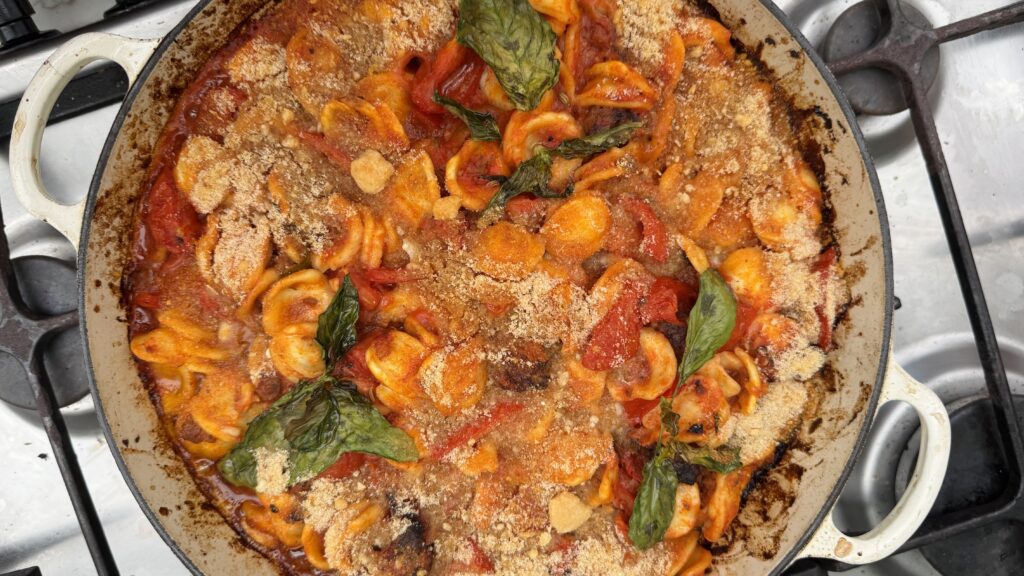

Orecchiette with cime di rapa, garlic, anchovy and chilli is Puglia’s signature winter pasta — simple, bitter, salty and utterly satisfying.
About the Dish
If there’s a single dish that captures Puglia’s essence, it’s orecchiette con cime di rapa — a plate that embodies everything our region stands for: simplicity, thrift, and an instinctive understanding of balance.
At first glance it seems austere: small, handmade pasta “ears” tossed with bitter greens, garlic, anchovy, and chilli. Yet the alchemy that happens in the pan tells the story of southern Italy’s culinary genius. The sweetness of the olive oil softens the bitterness of the leaves; the anchovy dissolves into a whisper of umami; the chilli pricks the palate just enough to wake it up. It’s a dish of contrasts — land and sea, bitter and smooth, humble and profound.
The orecchiette themselves are part of our region’s cultural identity. In Bari Vecchia, the old women still sit outside their doorways shaping them by hand — each small disc pressed and dragged with a thumb to create its hollow, ready to catch the sauce. The shape is practical, but it’s also symbolic: the ear that listens, the vessel that holds.
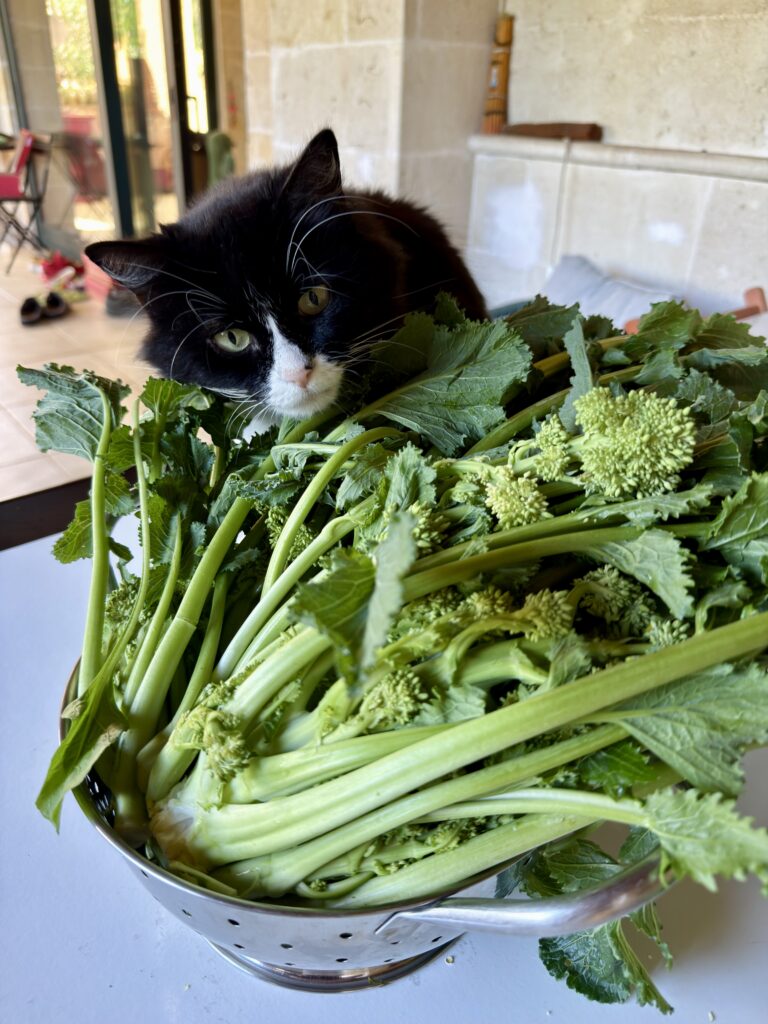
The star ingredient, cime di rapa (literally “tops of turnip”, and how you’ll find it translated on local menus), is not a leafy turnip at all but a variety of winter brassica closely related to broccoli rabe. It grows across Puglia’s countryside from autumn through spring, thriving in poor soil and coastal air. Its slightly bitter bite is the taste of the region’s inland hills and winter fields — the kind of ingredient that once sustained families through leaner months, now elevated into culinary heritage.
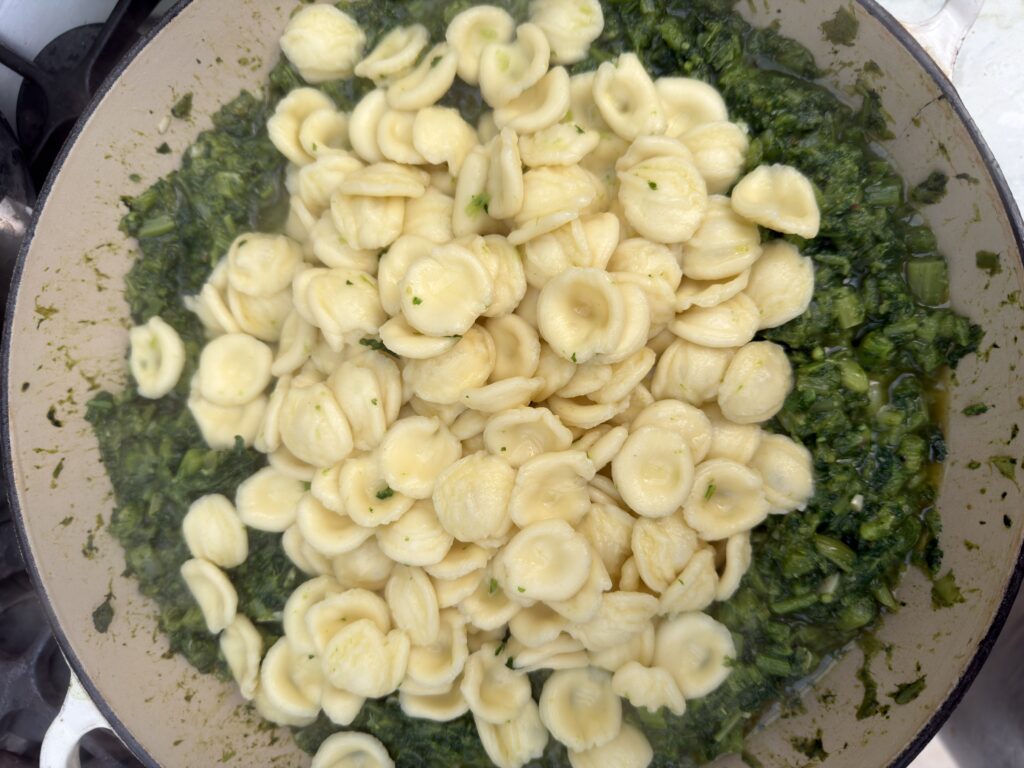
Cooked well, the greens collapse into a loose, green emulsion that clings to the pasta, glossy with new-season extra virgin olive oil. Traditionally no cheese is added. The salt of the anchovy and the richness of the oil are enough. In some homes, a scattering of pangrattato (breadcrumbs made from stale bread sautéed in olive oil until golden) replaces cheese, a final nod to the resourceful ingenuity of cucina povera. Nothing goes to waste.
Every region of Italy has a dish that tells its story. In Tuscany, it’s ribollita; in Emilia-Romagna, tagliatelle al ragù. In Puglia, it’s this: a bowl of pasta, greens and oil that captures the rhythm of a land between two seas — frugal, fertile, fiercely proud, and endlessly delicious.

Serves 4
Ingredients
- 400 g dried orecchiette
- 1.5 kg cime di rapa (rapini or broccoli rabe)
- 100 ml extra virgin olive oil from Puglia, plus extra to finish
- 4 medium garlic cloves, thinly sliced
- 1 small red chilly, deseeded and thinly sliced (or ½ tsp crushed chilli flakes)
- 6 – 8 anchovy fillets (we use fillets preserved in oil; if using salted anchovy fillets, rinse well)
- Sea salt and freshly ground black pepper


Method
1. Prepare the greens
Bring a large pan of approximately 4-5 litres of water to the boil (salt it well just before it comes to a rolling boil). Rinse the greens under cold running water to remove any grit.
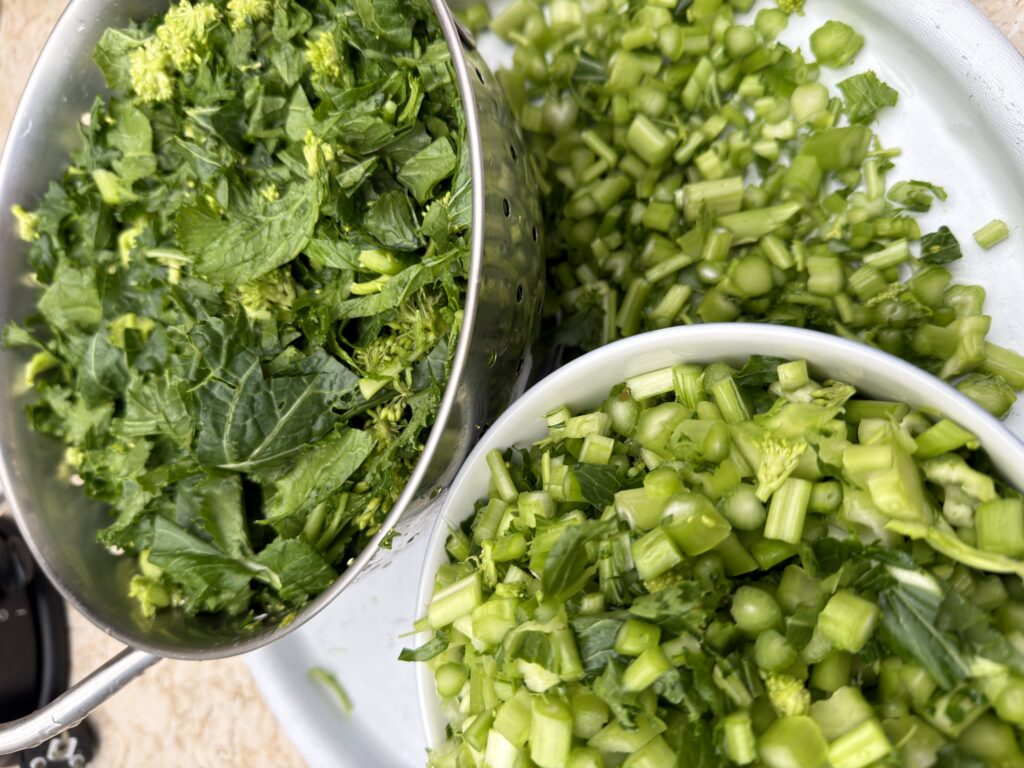
For a more finessed version, strip the leaves and florets from the stalks. Dice the stalks into small 5 mm pieces. Blanch the leaves and florets for 3–5 minutes until tender. Lift them out and spread out in a colander to cool. Add the diced stalks to the same water to cook for around 5 minutes, until soft. Drain well. To avoid an overly wet result (when cool enough), squeeze out excess liquid from the leaves and florets. Then chop them roughly.
Alternatively, and as is done in every Puglia kitchen, cut off the thick ends of the stalks and discard. Snap the stalks roughly in two, and then blanch all the greens together, for around 5 minutes. Remove from the water (retain the water for the pasta) and let them drain well.
2. Build the base
Warm half of olive oil in a large frying pan over medium heat. Add the garlic and chilli and cook gently for 2–3 minutes until the garlic turns golden. If it starts to brown, remove the garlic to avoid an overly bitter finish. Lower the heat, add the anchovies, and stir until they melt into the oil to form a savoury base. Add the diced stalks and cook for 10 minutes, adding a splash of water as needed to stop sticking.
3. Cook the pasta
Bring the water used for the greens back to a rolling boil (topping up if necessary). Add the orecchiette and cook according to the packet time, less 2 minutes. Reserve a full cup of the pasta water before draining.
4. Combine
Add the chopped leaves and florets to the pan with the stalks and anchovy mixture. Stir to combine, season generously with black pepper, and add a ladle (about 70 ml) of pasta water.
Drain the orecchiette, and add them to the pan. Pour in the remaining olive oil and stir over a gentle heat for a further 1–2 minutes. Add some of the reserved pasta water if it feels too dry. You want a glossy sauce that clings to the pasta and greens.
5. Serve
Taste and adjust the seasoning (hold off from adding any additional salt until now; it might not be needed). Serve immediately and finish with a final drizzle of extra virgin olive oil.

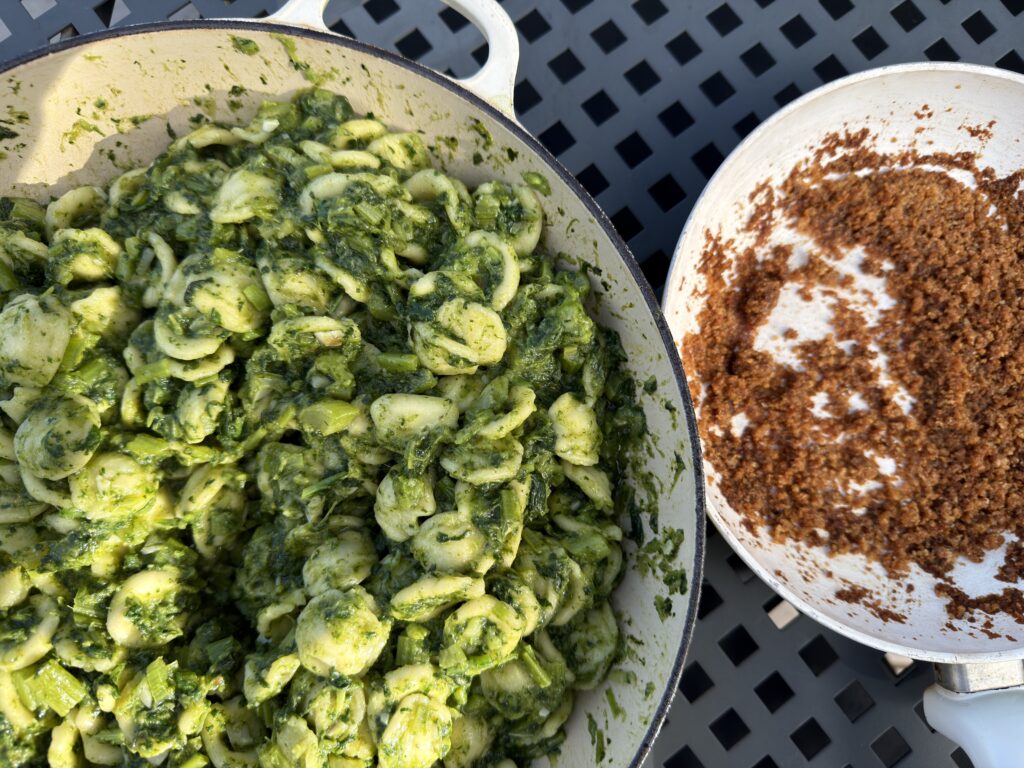
Puglia Kitchen notes: salt, mantecatura and spadellare
Salting the water
Wherever you are in Puglia, it’s never far from the sea. In our Puglia Kitchen we season the pasta water so that it tastes like the sea: mild, like the Adriatic. Use roughly a generous fistful of salt for every 4–5 litres of water. Properly salted water transforms the final flavour of the pasta.
As the pasta cooks, the water turns cloudy with starch. Always reserve a generous cup of the pasta liquor before draining. That starchy water helps emulsify sauces and gives them body when you bring everything together.
Mantecatura
This is the art of finishing: combining fat (olive oil, butter, or both) with sauce and a splash of hot pasta water to create a glossy emulsion. It’s the secret to silkier ragù and more luxurious pasta.
Spadellare
This is the moment you often see restaurant chefs perform at the stove — tossing the pasta in its pan just before serving. At home, in our Puglia Kitchen, we use a wooden spoon or tongs to stir the pasta and sauce together.
Regardless of whether you toss or stir, you need to work the pasta vigorously with the sauce over heat for at least 30 seconds, adding small splashes of starchy pasta water to keep it loose. This step is essential: the water evaporates, the starch thickens, and the sauce binds perfectly to every piece of pasta.
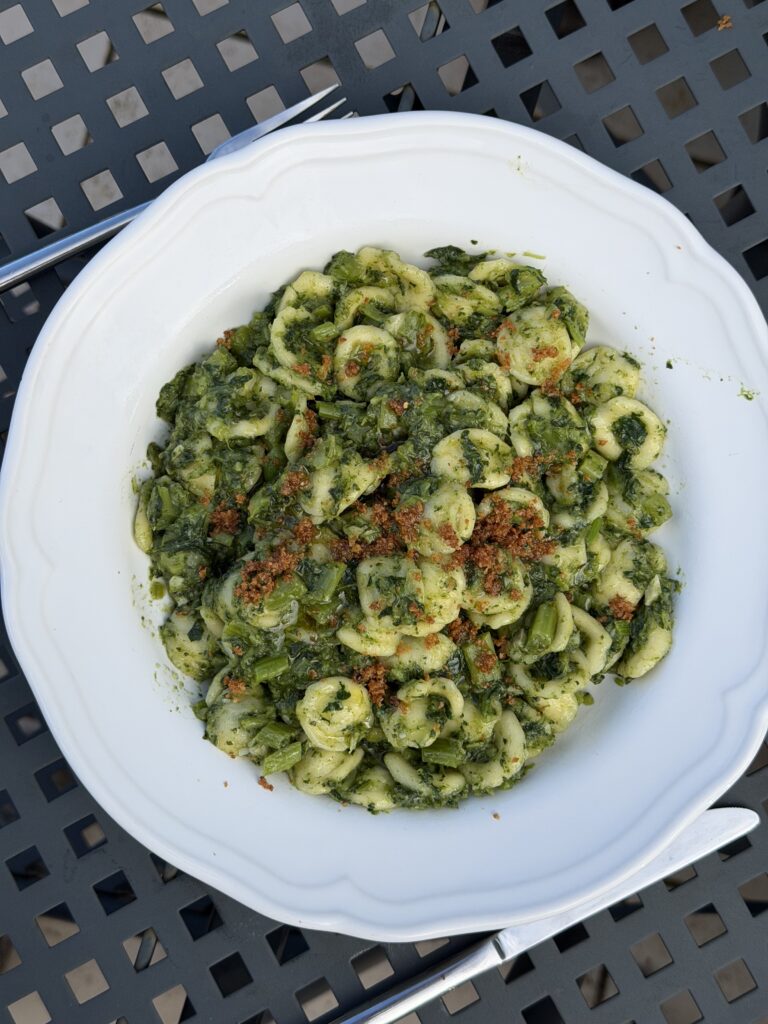
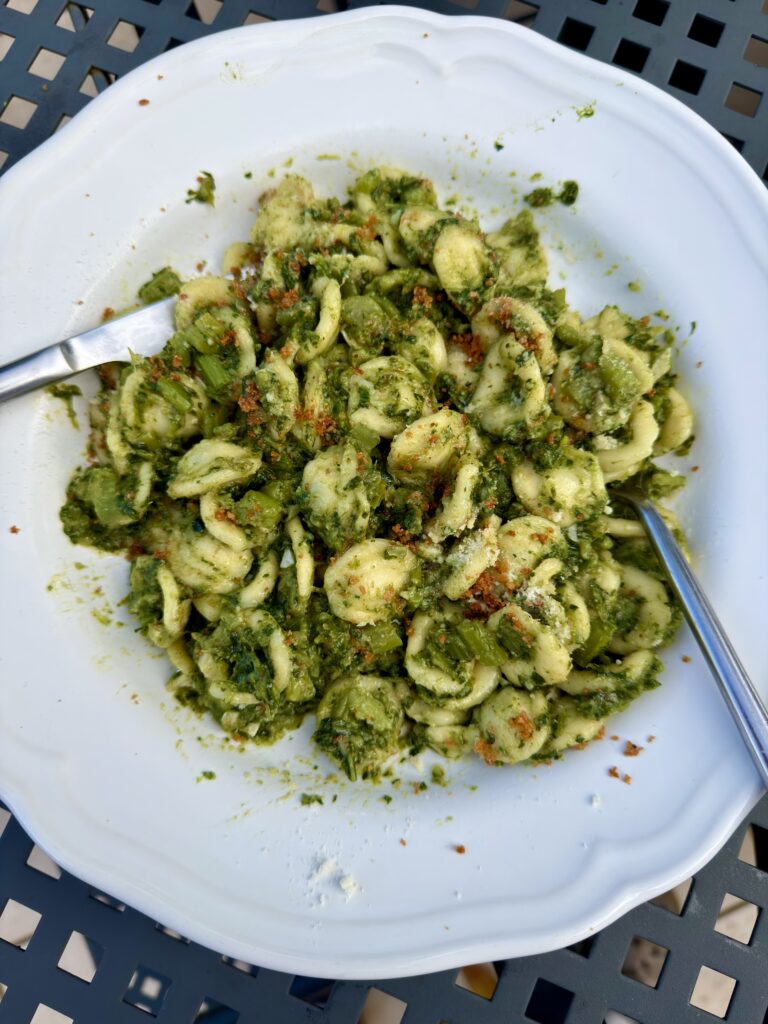
When to Eat It
Cime di rapa is at its best from late autumn through winter, often peaking between November and February. You’ll find this dish on every table in Bari during those months — in family kitchens, markets, and traditional trattorie. Even as towns quieten and the coastline seems to sleep, this is what locals eat when they come home to warmth and comfort.
Simple, seasonal, and unmistakably Puglian — a rewarding dish that proves once again the genius of cucina povera: making flavour from what the land provides.